
Your mortgage is current. You haven’t missed a payment to your lender in years. Then a certified letter arrives from your homeowners association claiming you owe several thousand dollars in dues, fines and legal fees, with foreclosure named as the next step. Most homeowners read that letter twice. Then they panic.
Yes, an HOA can foreclose on your house in Colorado, even when your lender has no complaint at all. Colorado has tightened the rules considerably since 2022, so you have more time and more protection than a homeowner had five years ago. You still have to use that time. An HOA foreclosure has stopping points scattered through it, and your equity is what rides on finding them.
What Gives an HOA the Power to Foreclose in Colorado
Two documents hand your association that power. The first is the Colorado Common Interest Ownership Act, or CCIOA, at C.R.S. § 38-33.3. The second is your own community’s CC&Rs, the covenants conditions and restrictions you accepted the day you closed. Signing those papers gave the homeowners association a right to bill you for assessments, record a lien when you don’t pay, and foreclose on that lien.
That isn’t a loophole. Colorado legislators granted associations collection power on purpose, because roads, roofs, pools and insurance get paid for by somebody. An association that can’t collect can’t operate. Colorado courts have upheld that reasoning for decades.
Foreclosure reform has changed the edges of it. Colorado lawmakers capped attorney fees, forced associations to offer payment plans, slowed the foreclosure process and added a redemption right. None of that removed the underlying authority to foreclose. Start from there and every decision after it gets easier.
How Unpaid HOA Dues Turn Into an Assessment Lien
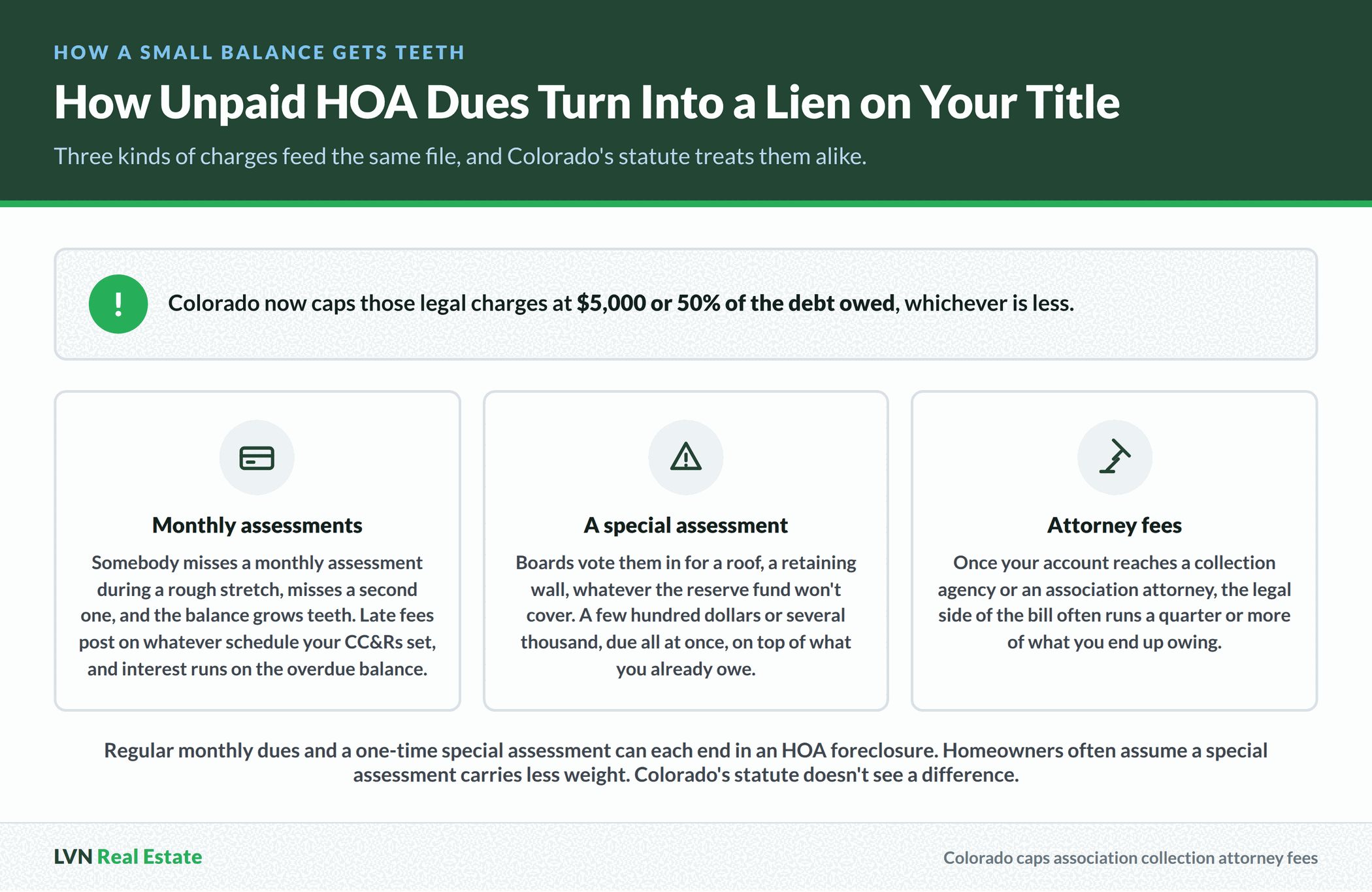
Most of these files start small. Somebody misses a monthly assessment during a rough stretch, misses a second one, and the balance grows teeth. Unpaid HOA dues rarely stay just dues. Late fees post on whatever schedule your CC&Rs set, interest runs on the overdue balance, and the number stops looking like something one paycheck covers.
A special assessment can land on top of that at any time. Boards vote them in for a roof, a retaining wall, whatever the reserve fund won’t cover. A special assessment might be a few hundred dollars or several thousand, due all at once. If you’re already behind on unpaid HOA dues, that single bill can push your account into formal collections within weeks.
Both kinds of HOA debt get treated identically once they age. A homeowners association exists to collect assessments and enforce the rules a community adopted, and the lien remedy backs up both jobs. Regular monthly dues and a one-time special assessment can each end in an HOA foreclosure. Homeowners often assume a special assessment carries less weight, since nobody voted on it at closing. Colorado’s statute doesn’t see a difference.
Attorney fees do the real damage. Once your account reaches a collection agency or an association attorney, the legal side of the bill often runs a quarter or more of what you end up owing. Colorado now caps those charges at $5,000 or 50% of the debt owed, whichever is less. One Colorado homeowner watched fines over dead tree branches and trash cans left at the curb grow into nearly $8,000 in legal fees.
When the board decides your delinquent assessments have gone on long enough, it records an assessment lien with the county clerk. That document is public. It attaches to your title, so you can’t sell the house or refinance without clearing the HOA lien first. Every step before that lien is a legal prerequisite, not a courtesy. A Colorado association that skipped a required notice has no basis to charge collection costs or start a foreclosure, even when the debt itself is real.
The HOA Foreclosure Process in Colorado, Step by Step
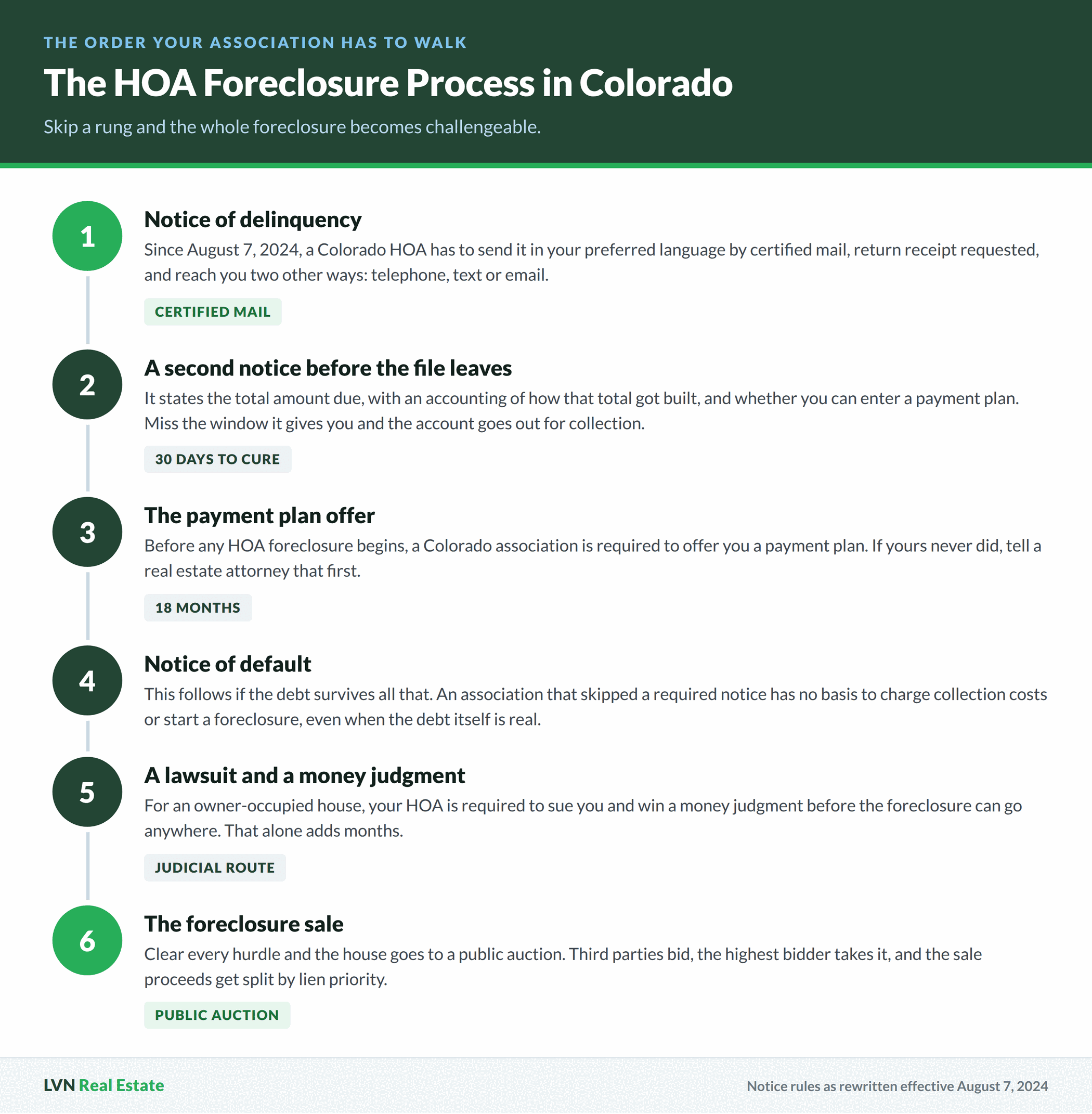
Colorado spells out the process in detail, and your association has to walk it in order. Skip a rung and the whole foreclosure becomes challengeable. Before an HOA forecloses on anyone, it has to clear notice requirements, a cure window, and in most cases a judge. Each of those steps gives you somewhere to intervene, and each one has cost associations their foreclosure when they rushed it.
Notice of Delinquency and Notice of Default
The first formal document is a notice of delinquency. Since August 7, 2024, a Colorado HOA has to send it in your preferred language by certified mail, return receipt requested, and reach you two other ways: telephone, text or email. Sloppy service on that notice gives you something to push back on, and a defective one can stall the foreclosure.
State law requires a second notice before your file goes to an attorney or a collection agency. It states the total amount due, with an accounting of how that total got built, and whether you can enter a payment plan. Miss the 30 days it gives you to cure and the account goes out for collection. A notice of default follows if the debt survives all that. Before any HOA foreclosure begins, a Colorado association is required to offer you an 18-month payment plan. If yours never did, tell a real estate attorney that first.
Judicial and Non-Judicial Foreclosure in Colorado
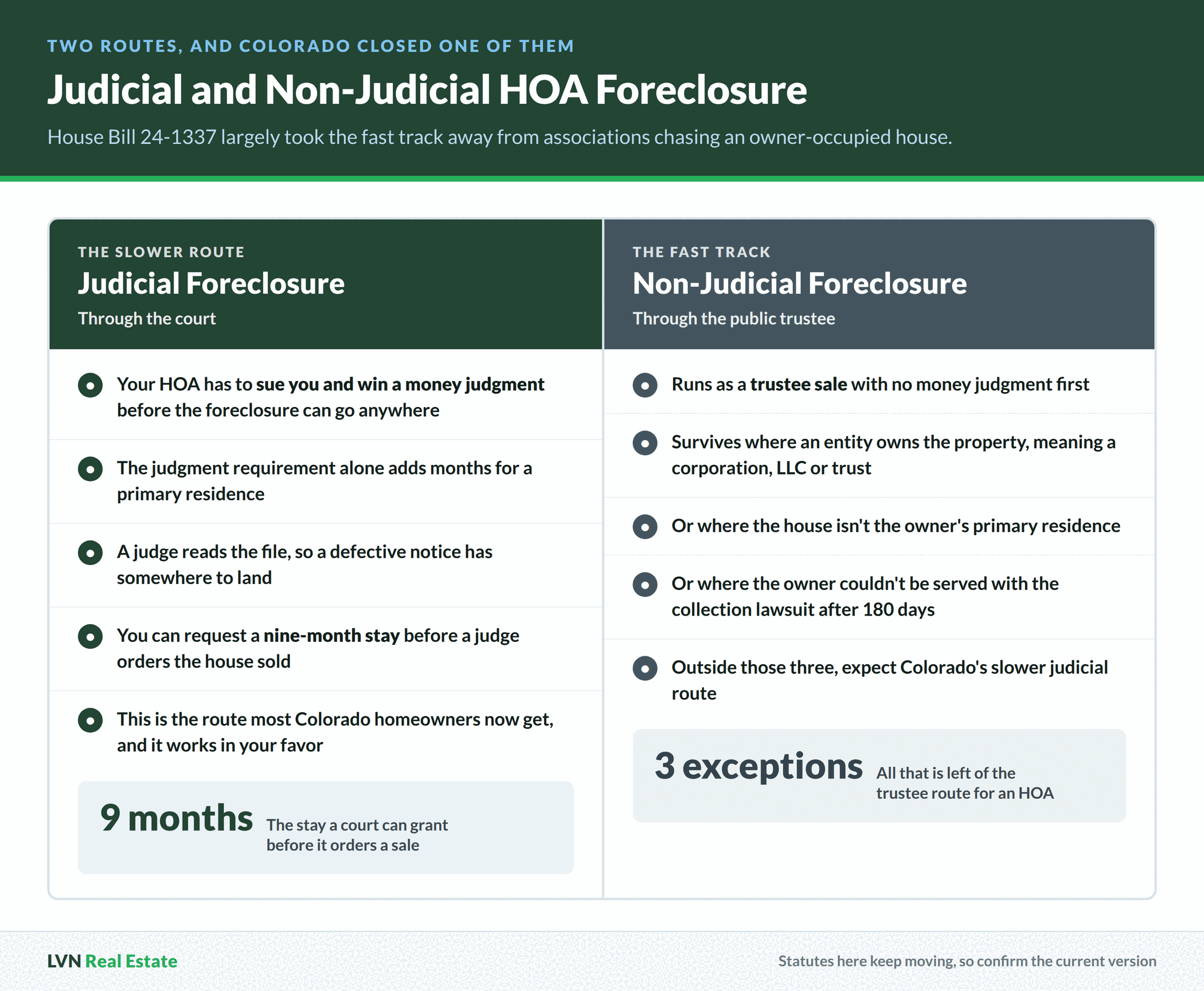
Colorado recognizes both judicial foreclosure and non-judicial foreclosure, the second running through the public trustee. A trustee sale is the fast track, and House Bill 24-1337 largely took it away from associations chasing an owner-occupied house. Your HOA is required to sue you and win a money judgment before the foreclosure can go anywhere.
Three exceptions survive. An entity owns the property, meaning a corporation, LLC or trust. The house isn’t the owner’s primary residence. Or the owner couldn’t be served with the collection lawsuit after 180 days. Outside those, expect Colorado’s slower judicial route, which works in your favor. HOA foreclosure practice has drawn reform bills since the 2022 session, when House Bill 22-1137 rewrote collection rules to keep people in their houses. The Colorado Sun has covered every round of it. Statutes here keep moving, so confirm the current version before you lean on any of this.
Six Months of Assessments, and the Foreclosure Sale
A Colorado association can’t foreclose over one missed payment. The debt has to equal six months or more of common expense assessments under the association’s adopted budget. At $200 a month, that floor sits at $1,200 in base assessments. Attorney fees and interest don’t count toward it the same way, so pull your ledger and check the math yourself.
Clear every hurdle and your house goes to a public foreclosure auction. Third parties bid, the highest bidder takes it, and the sale proceeds get split by lien priority. In November 2020, a foreclosed house in Golden’s Mesa View Estates neighborhood sold at an HOA foreclosure sale for $85,500 against an HOA debt of roughly $25,000. The association got paid in full. The former homeowner ate the difference.
Super Lien Priority and Your First Mortgage Lender
Lien priority decides who gets paid from a foreclosure sale and in what order. First position collects in full before a dollar reaches second, and a junior lienholder can get nothing. In most states your first mortgage lender sits at the top and the HOA lien waits behind it.
Colorado works differently. It’s a super lien state, so your association’s claim jumps ahead of the first mortgage no matter when either was recorded, up to six months of back dues plus associated costs. Whoever forecloses, that slice gets repaid first. Past those six months the recorded HOA lien is still subordinate to the mortgage, and the super lien portion survives the sale.
Picture the money at an actual auction. Six months of assessments come off the top, then the first mortgage lender collects against its balance, then junior liens in recording order. A homeowners association holding a large HOA lien often recovers only that six-month slice when a lender forecloses, which is exactly why associations file their own foreclosure instead of waiting. Foreclosing on its own lien puts the board in charge of the timing.
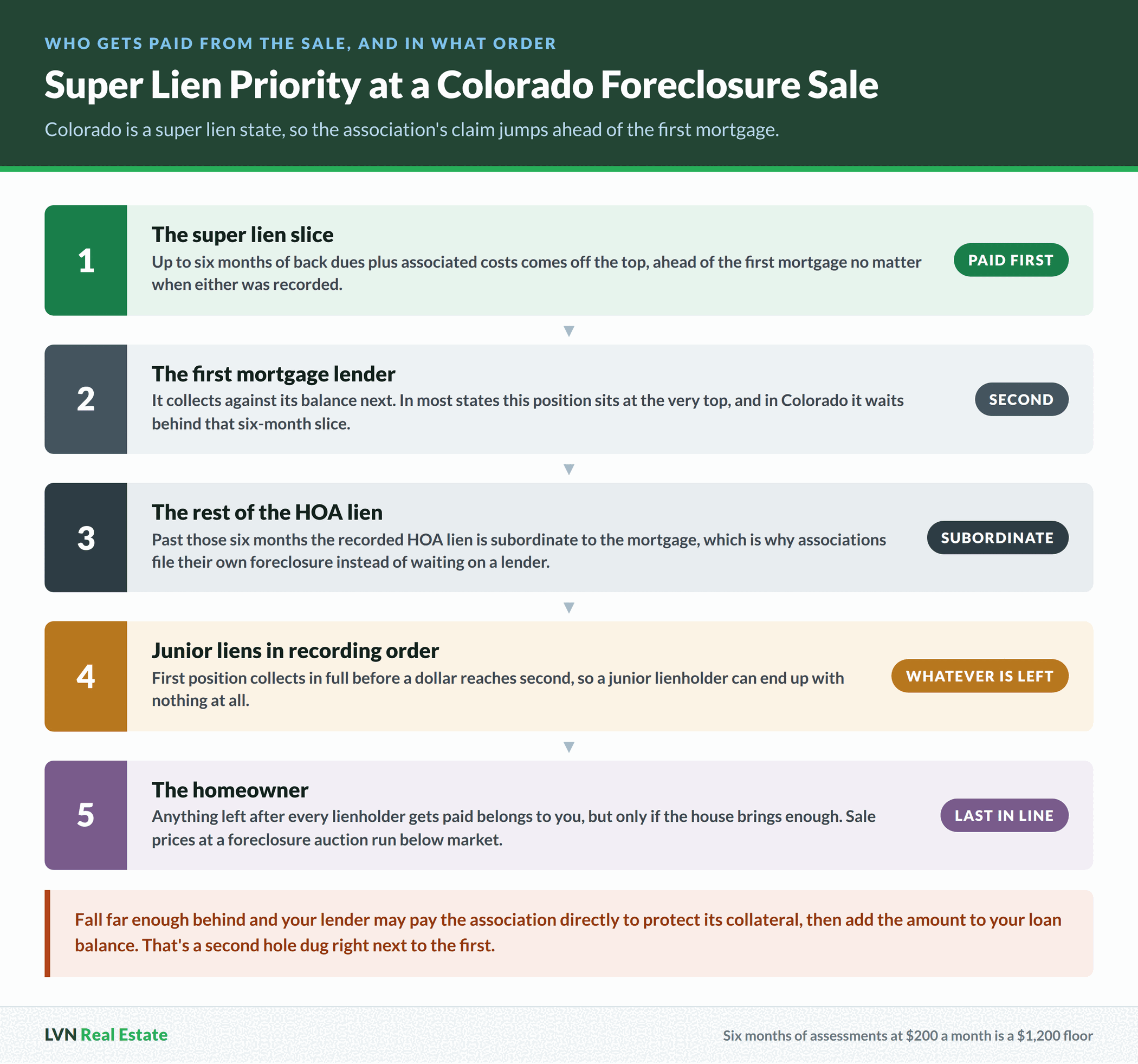
Your lender knows all of this. Fall far enough behind and it may pay your association directly to protect its collateral, then add the amount to your loan balance. That’s a second hole dug right next to the first.
Your Rights During the HOA Foreclosure Process
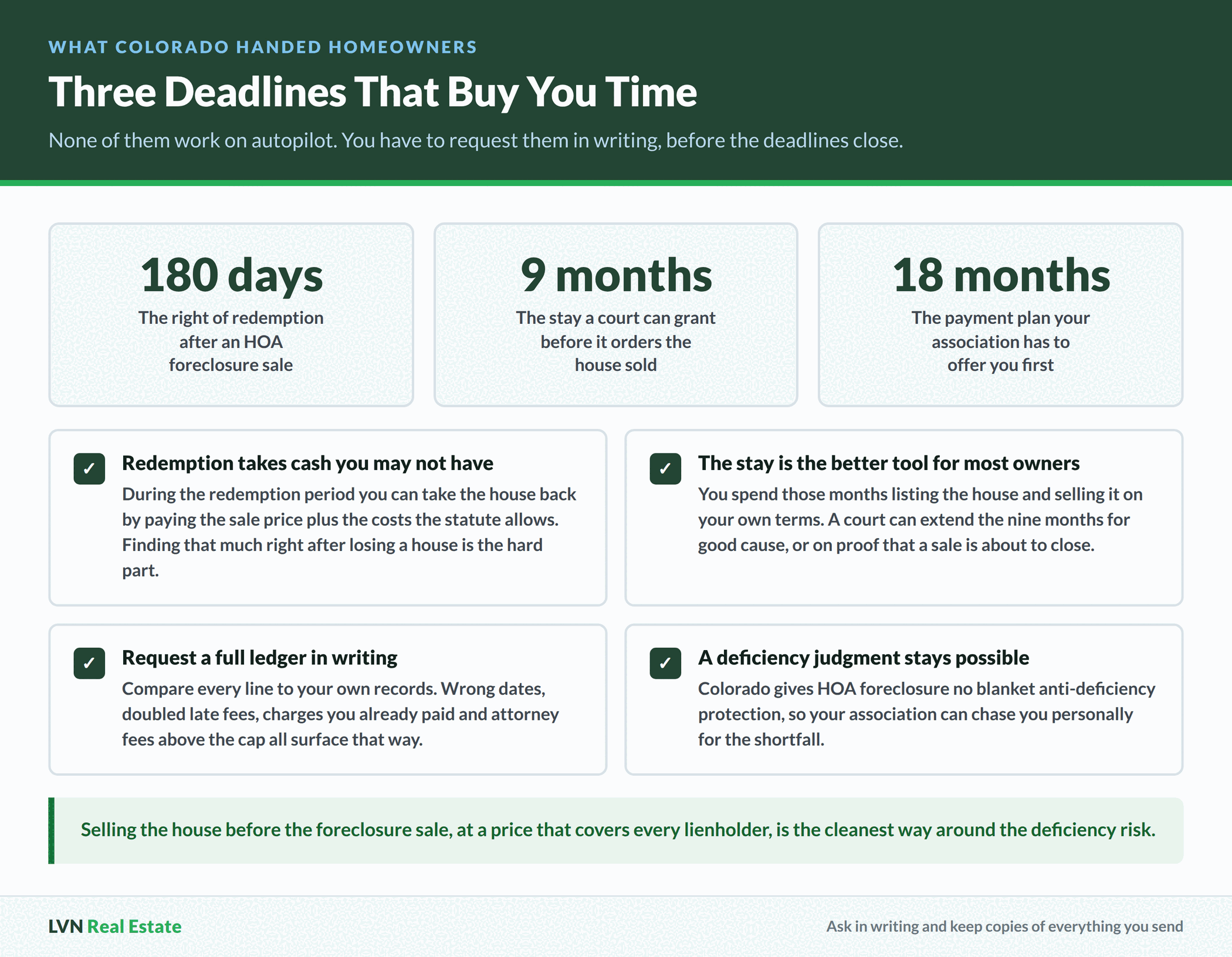
You hold more leverage here than the letters suggest. Colorado handed homeowners two significant tools in 2024, and both of them buy time. Neither one works on autopilot. You have to request them in writing, before the deadlines close.
The Right of Redemption and the Nine-Month Stay
A 2024 Colorado law created a 180-day right of redemption after an HOA foreclosure sale. During that redemption period you can take the house back by paying the sale price plus the costs the statute allows. Half a year sounds generous. Finding that much cash right after losing a house is the hard part, which is why redemption rescues fewer homeowners than it should.
The stay works better for most owners. Colorado lets a homeowner facing HOA foreclosure request a nine-month delay from the court before a judge orders the house sold at a foreclosure auction. You spend those months listing the house and selling it on your own terms. A court can extend the nine months for good cause, or on proof that a sale is about to close. Ask for it.
Deficiency Judgments and Disputing the Lien
Sell short of the debt at auction and the shortfall doesn’t evaporate. Colorado gives HOA foreclosure no blanket anti-deficiency protection, so your HOA can chase you personally for a deficiency judgment. A house that brings $85,000 against $120,000 in liens leaves you exposed for the gap. Selling the house before the foreclosure sale, at a price that covers every lienholder, is the cleanest way around that risk.
Push back where you have grounds. Request a full ledger from your HOA in writing, then compare every line to your own records. Wrong dates, doubled late fees, charges you already paid and attorney fees above the cap all surface that way. Put your dispute in writing and keep copies. Colorado associations negotiate more often than homeowners expect, because their attorney doesn’t want a long court fight either.
An HOA Lien Shows Up in Every Title Search
A recorded HOA lien surfaces in a Colorado title search on day one. Any buyer using a mortgage hits a wall, because that buyer’s lender won’t fund with a cloud on title. The title company will require payoff at or before closing, no exceptions.
Refinancing hits the same wall. Homeowners sometimes try to pull cash out of the house to clear an HOA lien, only to find that no lender writes a new loan over a recorded foreclosure action. The debt has to go first, which is the money you wanted to borrow. Selling the house outright is the usual way out of that circle.
Buyers behave accordingly. Some walk the moment a pending HOA foreclosure appears on the title report. The ones who stay know you’re on a clock, and they price that in. Close a sale before the auction, pay the HOA lien from sale proceeds, get the lien release recorded, and the whole problem lifts.
Options to Stop an HOA Foreclosure
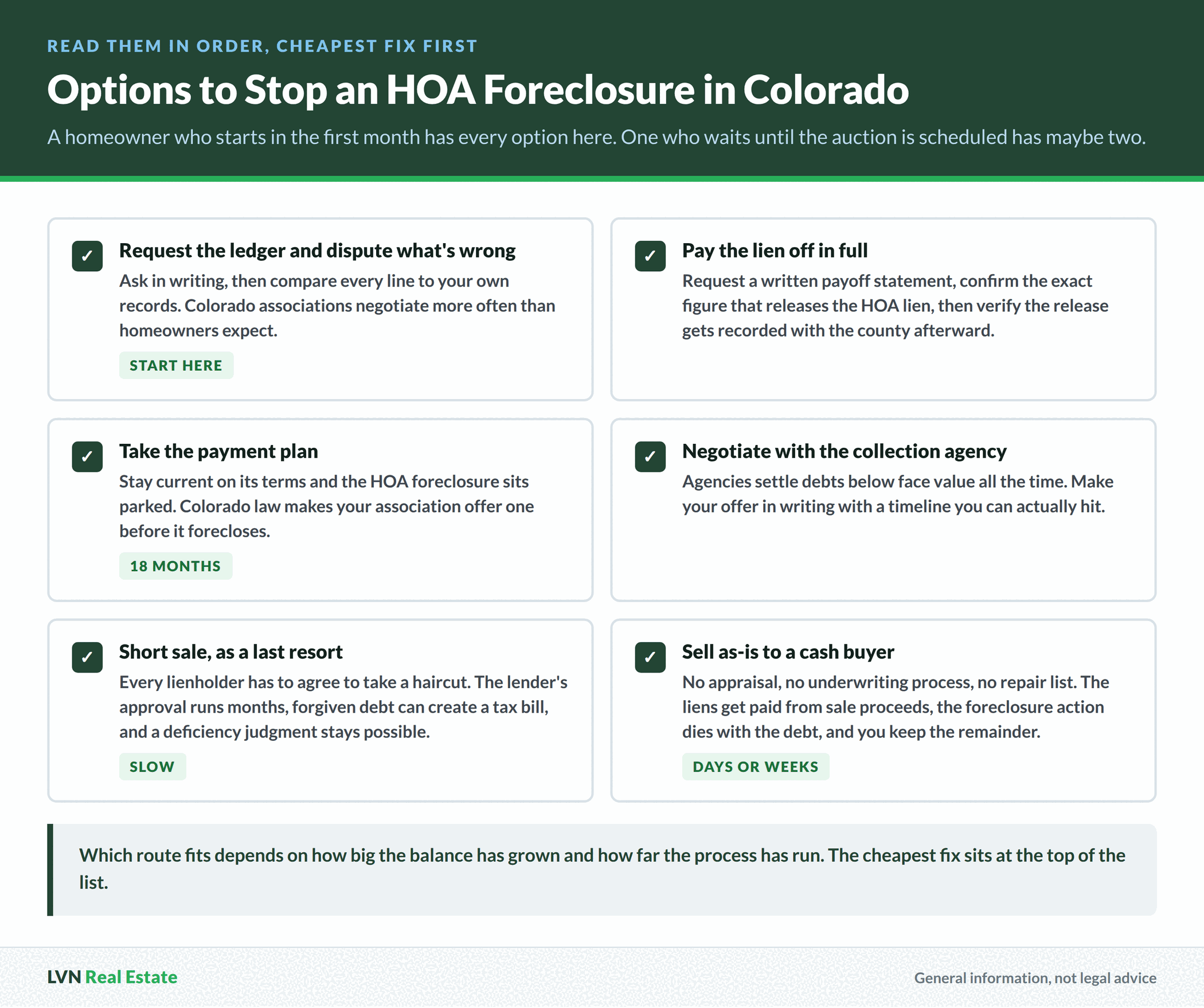
Which route fits depends on how big the balance has grown and how far the process has run. A homeowner who starts selling during the first month of an HOA foreclosure has every option below. A homeowner who waits until the foreclosure auction is scheduled has maybe two. Read them in order, because the cheapest fix sits at the top.
Pay the Lien Off or Take the Payment Plan
Paying in full ends it. Savings, a family loan, a retirement draw, any of those work while the number stays reachable. Request a written payoff statement from your HOA, confirm the exact figure that releases the HOA lien, and verify the release gets recorded with the county afterward.
When full payoff isn’t realistic, that 18-month payment plan is the next stop. Stay current on its terms and the HOA foreclosure sits parked. If a collection agency holds the file, negotiate anyway. Agencies settle debts below face value all the time, and an association attorney billing by the hour has his own reason to wrap the foreclosure up. Make your offer in writing with a timeline you can actually hit.
Short Sale as a Last Resort
A short sale means selling for less than the liens total, with every lienholder agreeing to take a haircut. Your association, your mortgage lender and anyone else recorded against the property have to sign off on it.
Slow is the word for it. The lender’s approval process runs months, forgiven debt can create a tax bill, and a deficiency judgment stays possible afterward. Expect credit damage, though less than a completed foreclosure leaves. A short sale still reads better on your record than an auction does. Don’t attempt a short sale without a real estate attorney and a tax advisor reading the paperwork.
Sell Your House Fast in an As-Is Cash Sale
Once foreclosure is moving, selling as-is to a cash buyer is usually the most practical way to sell your house fast and keep whatever equity is left. No appraisal, no underwriting process, no repair list. Closings run in days or weeks.
A cash buyer looks at the property and makes a cash offer, and if you accept, a title company processes the closing. Your HOA lien and mortgage get paid from sale proceeds, the foreclosure action dies with the debt, and you keep the remainder. You come out with far less credit damage than a completed foreclosure leaves behind.
Cash offers usually land below full retail, and an honest buyer says so upfront. That buyer absorbs condition risk and closes on your schedule. Set that against a forced sale where your house might bring a fraction of its value, and the gap between keeping your home equity and keeping nothing gets clear fast.
Frequently Asked Questions
Can an HOA foreclose on your house if your mortgage is current?
Yes, and it blindsides people every year. Your lender and your homeowners association are separate creditors with separate claims. Paying one has no bearing on the other. One Colorado homeowner stayed current on her mortgage the entire time and still watched her association foreclose and sell the house to a flipper. An HOA foreclosure over unpaid HOA dues stands entirely on its own.
How long does the HOA foreclosure process take in Colorado?
Longer than it used to, which helps you. Timing turns on how aggressive the board is, whether you contest anything, and how crowded the local docket runs. The money judgment requirement alone adds months for a primary residence, and the nine-month stay adds more. From notice of delinquency to completed foreclosure sale, a year or more is common.
Will an HOA lien show up when you try to sell?
Every time. A recorded HOA lien is a public document, and no competent title search misses it. Buyers, their lenders and the title company all see it. If you’re trying to sell your house fast with a substantial lien recorded, you’ll either pay it from sale proceeds at closing or work the payoff out with your buyer and the association. Cash buyers handle that more flexibly than financed buyers can.
What happens to your home equity if the association forecloses?
Often most of it disappears. Sale proceeds pay the HOA debt and your mortgage, and anything left over belongs to you, but only if the house brings enough. Sale prices at a foreclosure auction run below market, which shrinks the surplus. The cap on attorney fees and the right of redemption both protect home equity better than the old rules did. Selling ahead of the foreclosure sale protects it better still.
Can an HOA foreclose on a house that’s paid off?
Yes. An assessment lien attaches to the property, not to any mortgage recorded against it. Owning free and clear removes your lender from the picture, and that lender was the one party with reason to watch your HOA account and cover it. Nobody steps in for you. A paid-off house also carries the most home equity, which makes an HOA foreclosure the costliest possible outcome for the homeowner. Treat the first notice of delinquency as the real thing and get a real estate attorney reading the file early.
What Colorado Homeowners Should Do Right Now
Falling behind on HOA dues doesn’t make you a bad neighbor. Money gets tight, medical bills land, jobs end. Your HOA’s calendar keeps running regardless. The foreclosure process doesn’t pause while you think it over, so the useful move is acting while you still have choices.
Start with the ledger. Request it in writing, check every charge against your records, and dispute whatever looks wrong. Pay the balance in full if you can reach it, then confirm the lien release hits the county record. Can’t pay it? Request the payment plan in writing, because Colorado law makes your association offer one before it forecloses. If the number has outrun what a plan can fix, call a real estate attorney this week. The HOA Information and Resource Center at DORA is a decent free place to read up on your rights.
If a foreclosure notice is already in your hands and you’d rather sell your house fast than fight, we work with Colorado homeowners in exactly this spot. No repairs, no commissions, no waiting on somebody’s underwriter. We’ll show you the numbers, what’s left after the liens come off, and let you decide from there. When you want a second set of eyes and a low-key conversation, we’re here.
Disclaimer: This article is for information only and isn’t legal advice. Colorado HOA and foreclosure laws change often. Review your own CC&Rs and the current statutes, and talk to a licensed real estate attorney before you make decisions about your property.
Where LVN Real Estate Buys Houses Across the Denver Metro
Most of the homeowners who call us about an HOA lien live in the Denver metro, and covenant communities are thick on the ground here. We buy in Denver, Aurora and Lakewood, and out through Arvada, Thornton and Littleton. If your house sits in any of them, we already know how fast that county records a lien release and what the local title companies want to see before they’ll close on a house with an HOA foreclosure pending. LVN Real Estate has been buying Colorado houses as-is since 2013, and our service area runs the length of the Front Range and well past it. Colorado makes an association clear a list of steps before an HOA forecloses, and every one of them is somewhere you can still act.
Talk Through Your Options Before an HOA Forecloses
You don’t have to decide anything today. If you want a straight read on what your house would bring in a cash sale, and how that sits next to the payoff figure your association gave you, contact us and we’ll take a look. There’s no obligation and nobody chasing you afterward. If you’d rather read first, our common questions page covers how a cash offer gets built and what happens once you accept. You can also fill out the short form below and we’ll come back to you with a number. Bring your CC&Rs, the association ledger and any foreclosure notice you’ve received, because the math gets real once we can see what the HOA says you owe.