
You bought the duplex years ago with good intentions. Rent came in, checks cleared, and the repair list grew. Now Denver wants a license before you can keep renting, and getting one starts with an inspection you’re not sure the property will pass. Plenty of small Denver landlords sit in that same spot. The paperwork hides a bigger question. Is this property still worth keeping?
What a Denver Rental License Is and Who Needs One
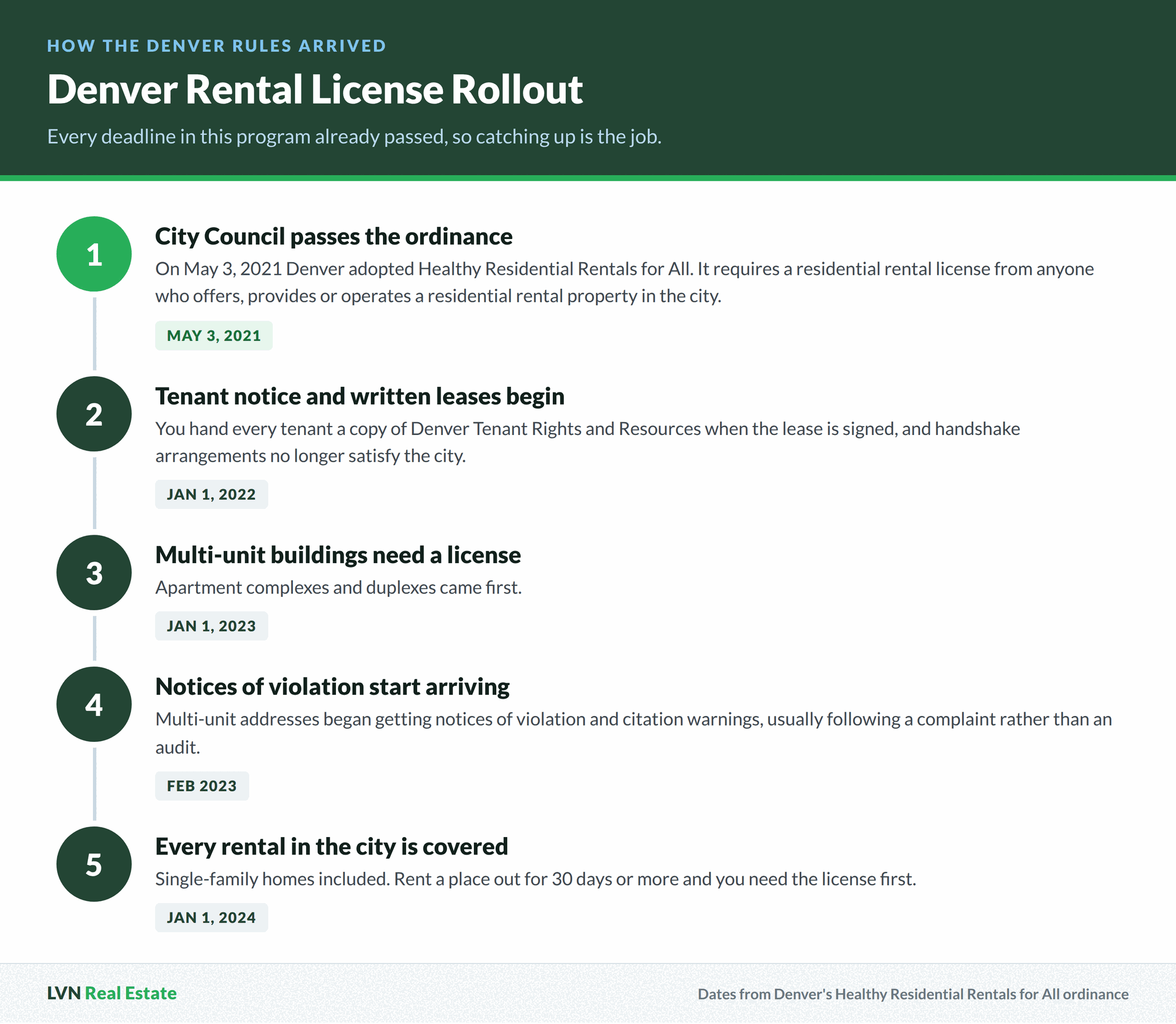
On May 3, 2021, the Denver City Council passed an ordinance called Healthy Residential Rentals for All. It requires a residential rental license for anyone who offers, provides, or operates a residential rental property inside the City and County of Denver. Rent out a home, a duplex unit, an apartment, or an accessory dwelling unit for 30 days or more and you need a Denver rental license before the rent is legal. That’s a hard requirement, and ignoring it costs real money. The Residential Rental Program exists to enforce minimum housing standards so renters get safe, sanitary places to live, and most landlords agree with that goal in principle.
Rollout came in phases. As of January 1, 2023, multi-unit buildings such as apartment complexes and duplexes needed one. Starting January 1, 2024, the requirement covered every residential rental property in the city, single-family homes included. Both deadlines sit behind you now, so you’re not getting ahead of this one, you’re catching up.
One wrinkle catches landlords with more than one property. Denver requires a separate residential rental license for each property you own or manage inside the city. Two rental properties on two parcels means two applications and two sets of fees. That math is where a small landlord’s portfolio starts to feel expensive.
Who Runs the Program, and What Skipping It Costs
The Denver Department of Excise and Licenses, now called the Department of Licensing and Consumer Protection, issues, tracks, and enforces all of this. That office runs the application portal, keeps the roster of qualified inspectors, and maintains the rental license lookup. It also mails notices of violation to landlords who never applied. Those notices usually follow a complaint rather than an audit.
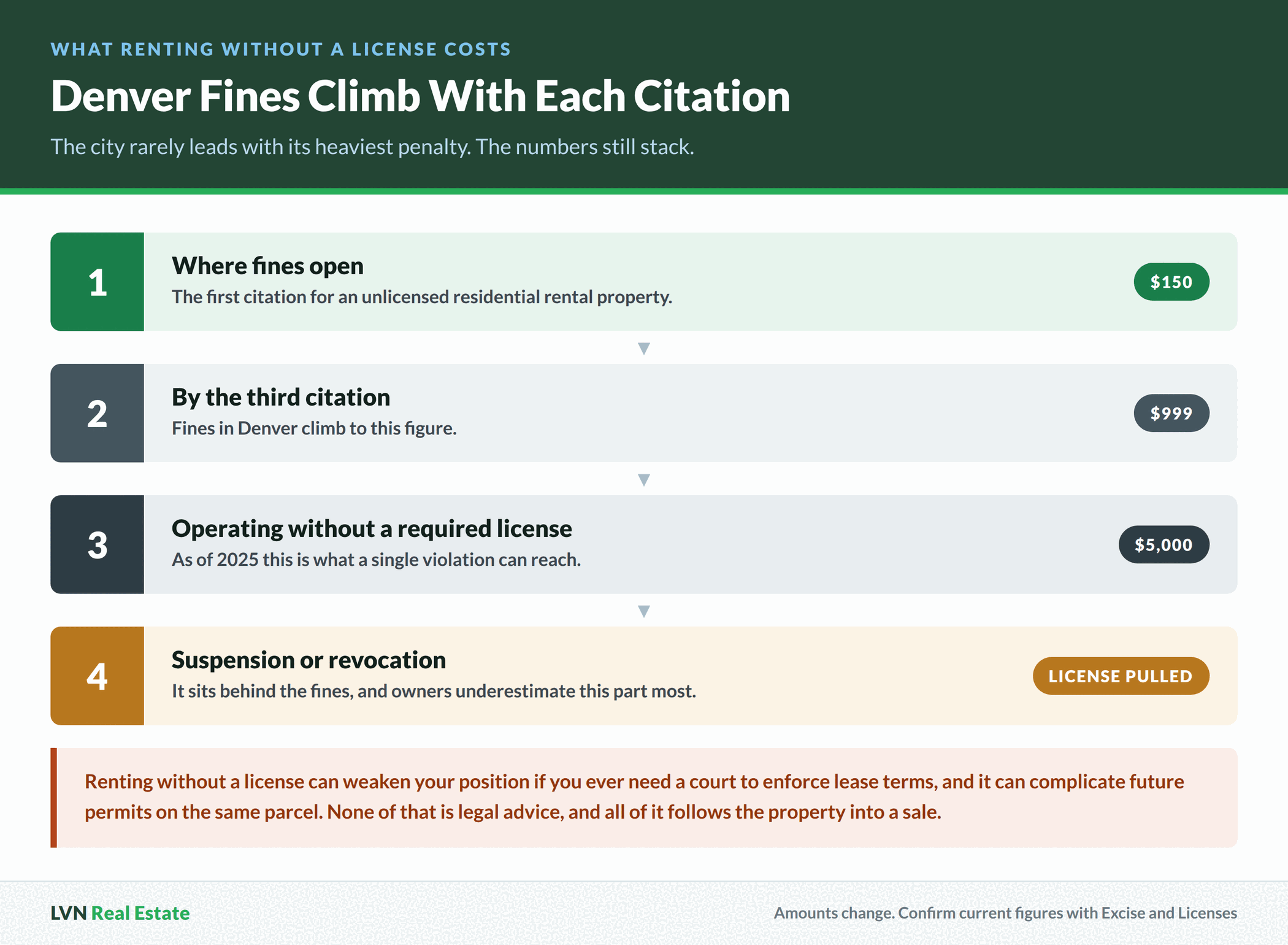
In February 2023, multi-unit addresses started getting notices of violation and citation warnings. Fines in Denver open at $150 and climb to $999 by the third citation. The city rarely leads with its heaviest penalty. Those numbers stack, though, and operating without a required Denver rental license can reach $5,000 per violation as of 2025.
Unlicensed residential rental properties draw citations, and suspension or revocation sits behind the fines, the part owners underestimate most. Renting without a license can weaken your position if you ever need a court to enforce lease terms. It can complicate future permits on the same parcel too. None of that is legal advice, just the practical picture, and it follows the property into a sale.
The Home Inspection Every Denver Landlord Has to Clear
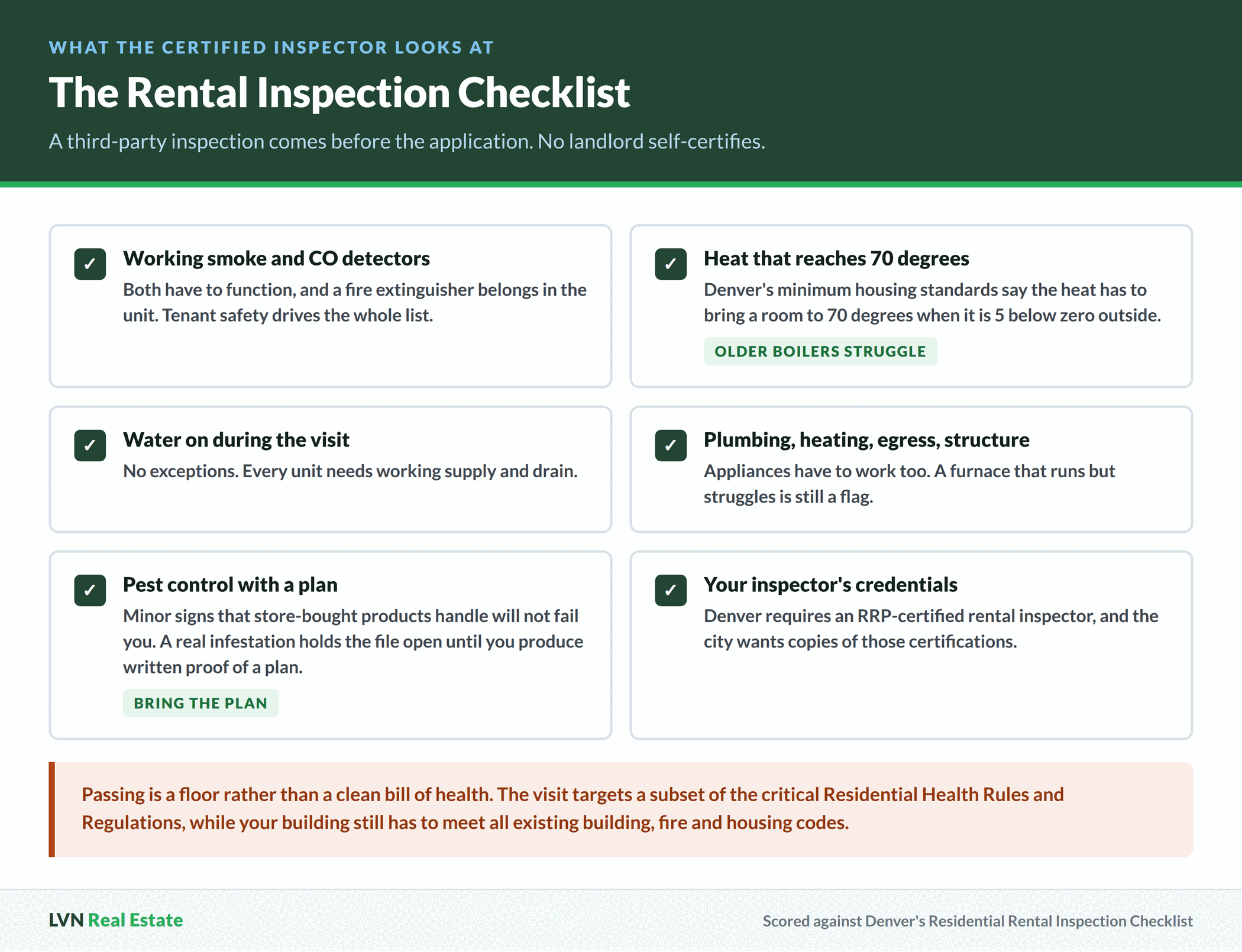
Before you apply, the property has to pass a third-party home inspection. No landlord self-certifies here, and a friend in the trades won’t work either. Denver requires an RRP-certified rental inspector. That person walks the property and scores it against the Residential Rental Inspection Checklist. The city requires copies of that licensed home inspector’s certifications too.
A home inspection covers a defined list, not every code item on the books. City regulations aim these visits at a subset of the critical Residential Health Rules and Regulations. Your building still has to meet all existing building, fire, and housing codes. So passing the minimum housing standards inspection isn’t a clean bill of health. You cleared the floor Denver chose to prioritize, and it sits lower than most landlords assume.
Tenant safety drives the inspection checklist, so appliances have to work. Smoke detectors and carbon monoxide detectors have to function, and a fire extinguisher belongs in the unit. Inspectors also check plumbing, heating, egress, pest control, and structure. Denver’s minimum housing standards say the heat must bring a room to 70 degrees when it’s 5 below zero outside. Older boilers in aging rental properties don’t always manage that.
Water must be on during the home inspection, with no exceptions. Every unit requires working supply and drain. Pest control gets a look as well, and minor signs of pests that store-bought products handle won’t fail you, given a plan to mitigate. A real infestation is different, and your inspector can hold the file open until you produce written proof of that plan.
Common code violations are rarely dramatic. Think of a furnace that runs but struggles, a water heater 15 years past its install date, a bathroom fan that quit two winters ago, peeling paint, a door that won’t latch. None of it feels urgent while rent keeps arriving. Each one is a flag at inspection time, and flags turn into failed items you fund before the city clears the file.
Deferred maintenance is what actually hurts a small landlord. A duplex carrying 10 years of it can need several thousand dollars of work before it’s inspection-ready. Smoke detectors, handrails, water heater straps, an egress window that never closed right. All of that lands before you’ve paid the inspection fee.
How to File the Denver Rental License Application
Your license application goes through Denver’s Online Permitting and Licensing system. Gather the paperwork first, because you’ll want the property address, parcel details, proof of ownership, the completed home inspection report, and your inspector’s credentials.
Some landlords can substitute an alternative report certifying compliance with federal housing standards. Those come from a local, state, or federal agency, or a state finance agency. Affordable and public housing properties use that route, but most small landlords won’t qualify, so price in the standard RRP checklist instead.
Fees scale with the number of units at one address. A single dwelling unit runs $50. Two to 10 units cost $100, 11 to 50 units cost $250, 51 to 250 units cost $350, and 251 or more costs $500. For a single-family rental or duplex, the city’s piece is modest. The third-party inspection is usually the bigger line, often $150 to $300 or more depending on the inspector and the property size. Confirm current amounts with the Denver Department of Excise and Licenses.
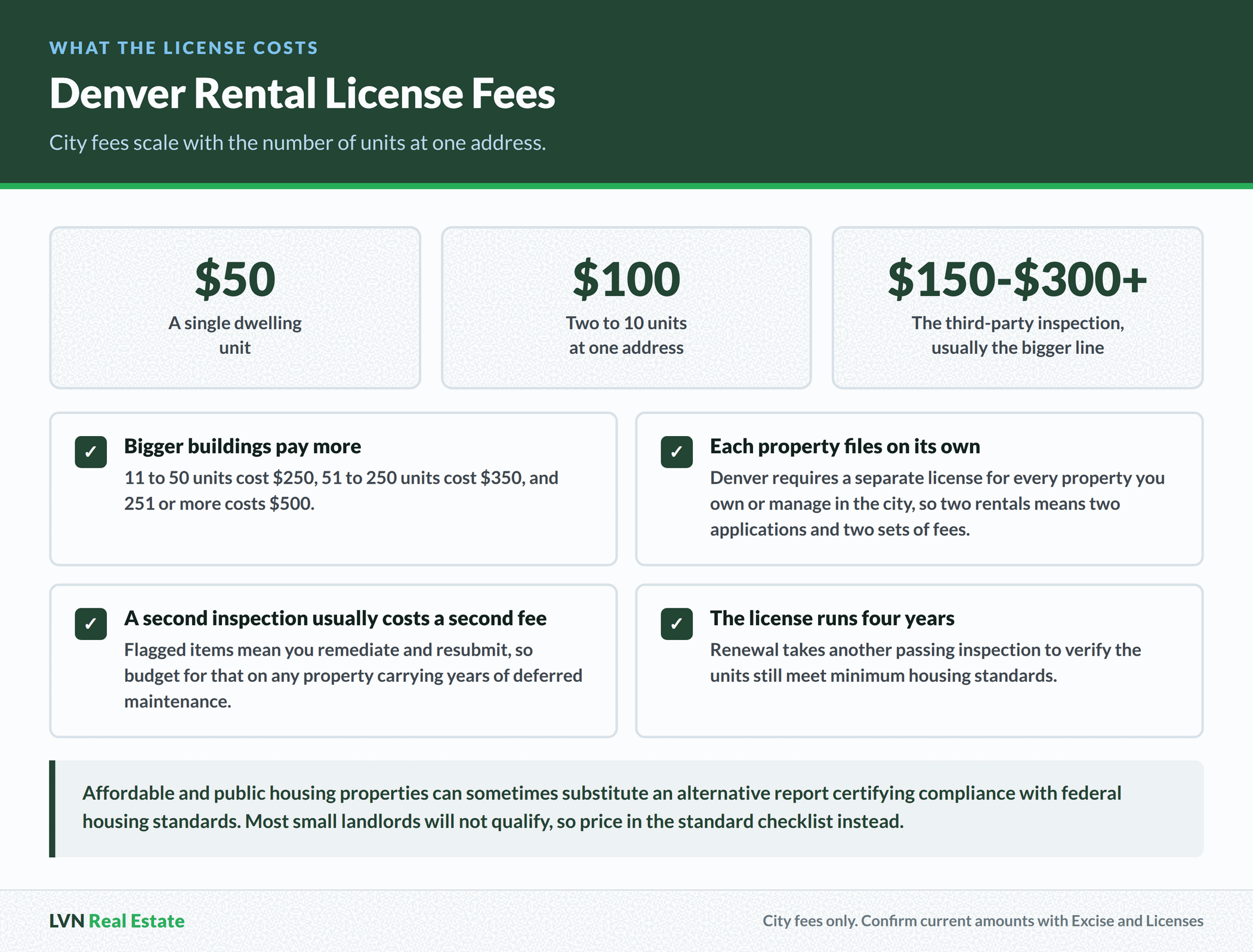
The city then reviews the file alongside the inspection report and issues the license if everything checks out. Flagged items mean you remediate and resubmit for a second inspection. Budget for that outcome on any rental property carrying years of deferred maintenance.
License Renewal and Staying Current
A Denver rental license lasts 4 years. Four years beats an annual renewal, a rare piece of relief here. It also moves faster than it sounds, so mark the expiration the day it arrives, then set a reminder six months out.
Renewal isn’t paperwork alone, since it requires another passing inspection to verify the units still meet minimum housing standards. Whatever you defer across the term comes back then, priced at whatever contractors charge.
Expiration isn’t the only trigger. Certain changes to the property, or a complaint from a tenant, can bring an inspector out mid-cycle. A tenant who calls 311 about a habitability problem can trigger a city inspection unrelated to your renewal timeline. Keeping up with maintenance is the cheapest way to avoid an inspection you didn’t schedule.
A licensed Denver landlord keeps contact information current, answers notices the department sends, and holds the property at the standard the inspection certified. Let things slide and the next inspector finds it.
How to Use the Rental License Lookup Tool
The rental license lookup sits on the Denver Excise and Licenses website. Search a property address and you’ll see whether a rental is active, pending, expired, or missing. Every landlord should run the rental license lookup on their own property after applying. Processing delays happen. Confirming the status reads active before a new lease saves an awkward conversation.
That same tool shows the license number you’re required to put in rental ads. If the number in a listing doesn’t match, fix it quickly. Keep a screenshot of the active status handy, because whoever asks for proof usually wants it that day.
Most landlords forget the lookup is public. A prospective tenant can search your property before signing, and a status reading expired scares off good renters. Anyone weighing an exit should sit with that. A buyer can run a rental license lookup before making an offer, and an unlicensed property gets priced down or passed over.
Tenant Notice and Your Other Obligations
Since January 1, 2022, you’ve had to hand tenants a copy of Denver Tenant Rights and Resources when the lease is signed. The same tenant notice has to go out with a rent demand. It summarizes what Denver landlords and tenants owe each other. Read it before assuming you know what’s in it.
Skipping that notice does more than put you out of compliance. It hands a tenant leverage in a dispute over habitability or eviction. A buyer’s attorney will find the gap during diligence too. Keep a signed copy in the file for every lease you execute. Denver publishes the PDF, and printing it costs you nothing.
Written leases became a requirement on the same date. Handshake arrangements no longer satisfy the city, so put your license number in every ad and you’ve covered the ongoing landlord obligations.
When the Rental Stops Being Worth Keeping
Picture the spot a lot of small landlords are actually in. Your Denver duplex has been rented for years, and the roof is aging, the furnace is original, and the panel mixes what came with the home and what a handyman added. You’ve kept it functional, but functional and passing an inspection aren’t the same standard.
The bind works like this. Renting legally takes a residential rental license, and getting one takes a passing inspection, which means capital repairs you hadn’t planned to fund. So there’s a bill in front of you just to keep collecting rent on a rental property that never produced much.
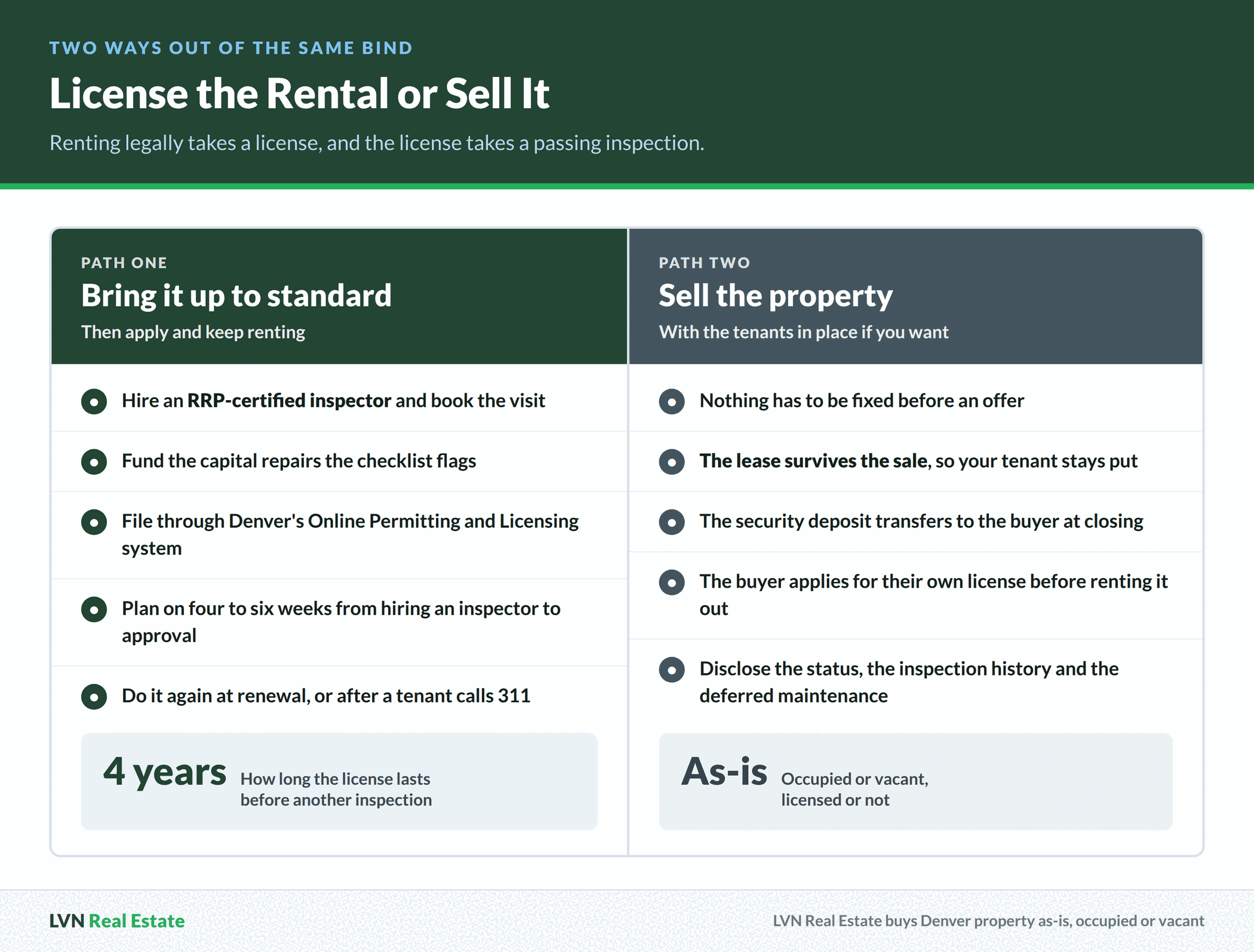
Selling is one option, and you can do it with tenants in place, no waiting out the lease and no moving anyone. Denver buyers who want occupied properties exist, and cash buyer interest in as-is property is steady. An occupied sale carries more moving parts than a vacant one, and landlords get it done routinely.
You can’t mislead a buyer about the tenants or the license status. That lookup is public. Diligence surfaces compliance problems anyway. Disclose the status, the inspection history, and the deferred maintenance you know about. Transparency protects you. It keeps a sale from collapsing before closing.
One detail surprises sellers, because the lease survives the sale, so your tenant keeps their home on the terms they signed with you. They don’t move, and they don’t sign anything new unless both sides want to. Their security deposit transfers to the buyer at closing, and your obligation ends there. The buyer steps into your role, subject to the same requirements you faced, tenant notice included. A buyer planning to move in follows Denver’s owner-occupancy and lease termination rules.
Frequently Asked Questions About the Denver Rental License
Can I sell my rental property if it doesn’t have a current license?
Yes, nothing stops you from selling a property without a current license, since it attaches to renting rather than ownership. Sell to someone who plans to live there and the question goes away. Sell to an investor and they’ll get their own Denver rental license before renting it out, then build that timeline into the offer. Disclose the status either way.
Does every unit in a duplex need its own residential rental license?
No, landlords who own duplexes, apartment buildings, and other multi-unit dwellings on a single parcel hold one residential rental license for the property, with the fee scaled to the unit count. You identify all the units on the application, then check with the department for the structure before you file.
What happens if my rental fails the home inspection?
A failed home inspection pauses the process instead of ending it. You’ll get a report listing what didn’t pass. Fix those items, schedule a re-inspection with your certified inspector, and submit the passing report with the license application. A second inspection usually costs a second fee. Treat the report as a work list and a number to weigh against what the property earns.
How long does it take to get a Denver rental license?
Two things drive the timeline: inspector availability and city processing. Scheduling swings by season, and processing can run several weeks. Plan on four to six weeks from hiring an inspector to approval, and add time if repairs come first. Landlords who wait for a complaint to force the issue get the slowest version of this.
If I sell, does the buyer have to get a new rental license?
Yes, it belongs to the owner or the manager, not permanently to the address. When ownership changes, the new owner applies for their own Denver rental license before renting the property out. An investor buying it as a rental factors that into both timeline and offer, and it shows up in the numbers.
Is Holding on to Your Denver Rental Still the Right Move
That’s the real question under all the paperwork. Licensing turned a vague sense that the property needed work into a checklist, an inspection, and a repair bill that’s either worth paying or isn’t. Nobody else can run that number for you.
Some landlords will run it and decide the repairs make sense. Solid tenant, property that cash-flows, maintenance that’s genuinely manageable: apply. Book the inspection, fix what the checklist requires, and the four-year term gives you room to earn the cost back.
Other landlords will run the same numbers and land somewhere else. If the roof, the furnace, and the panel all come due at once, and the rent doesn’t justify the outlay, the calculus shifts. Licensing may clarify a decision you were already drifting toward. Maybe you’ve wanted out of the Denver market for a while. That’s honest math, not a failure.
You’ve got options in that case. Bring the rental property up to standard, get licensed, and list it as a fully compliant Denver rental. Work with an agent and sell with or without tenants in place. Or sell as-is to a cash buyer, skip the repair list, and close on a timeline you set.
At LVN Real Estate, we buy Denver properties as-is, occupied or vacant, licensed or not. We’ve been doing this since 2013, we’re BBB accredited, and we’re veteran-owned. Nothing has to be fixed before we make an offer. If you want to know what your rental is worth in its current condition, reach out to us at LVN Real Estate and we’ll talk it through. No obligation and no pressure, just a straight conversation about what makes sense.
This article is general information, not legal advice, and fee amounts, fines, and program details change. Verify current requirements with the Denver Department of Excise and Licenses, and talk to a Colorado attorney about your own situation.
Where LVN Real Estate Buys Rental Property Around Denver
Most of the rentals we look at sit inside Denver, though we buy all over the metro and out along the Front Range. Landlords in Aurora, Lakewood and Arvada call us with the same licensing questions. So do owners in Thornton and Littleton, where the rules read differently because a Denver rental license only covers property inside the City and County of Denver. We buy across Colorado, licensed or unlicensed, occupied or empty.
Talk Through What Your Denver Rental Is Worth Now
Nothing here puts you on a clock. If you want a straight read on what your rental property would bring in a cash sale, with the tenants staying or the place sitting empty, contact us and we’ll look at it with you. No obligation, and nobody chasing you afterward. If you’d rather read first, our common questions page covers how an offer gets built and what happens once you accept one. Or fill out the short form below and we’ll come back to you with a number. Renew the license or step away from the property, either way the call stays yours.