
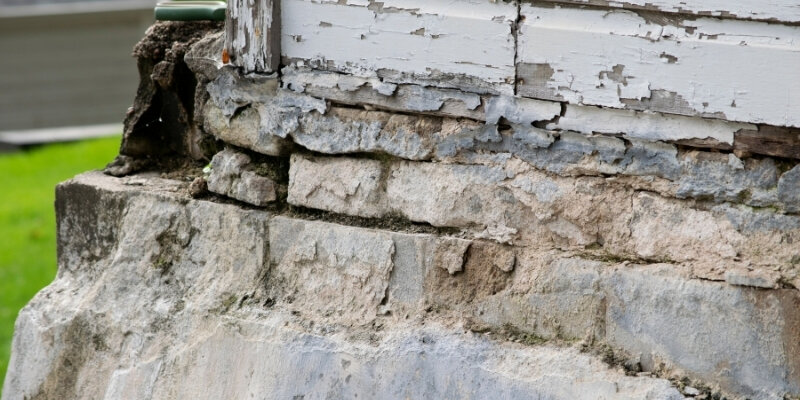
The clay under the Front Range moves. Soil volume can expand 10 percent or more once that clay takes on water. The Colorado Geological Survey ranks expansive soil as the state’s most significant geologic hazard, blamed for more property damage than floods, earthquakes, and tornadoes combined. You see it as a horizontal crack in a foundation wall. Or a bedroom door that stopped latching three springs ago.
I’ve bought houses in this state for a long time. Foundation issues are what make Colorado sellers freeze. They picture a six-figure repair bill, a buyer walking out mid-inspection, and a listing that rots on the MLS until they give the place away.
That worry is usually wrong about the size of the number and right about the shape of the problem. Let’s do the arithmetic. What a listing really costs you, what the objection after inspection looks like, how metro district taxes hit your closing statement, and how to find your walk-away number.
What Does It Cost to Prep, Stage, and Carry a Listed Home?

Let me say the uncomfortable part the way I’d say it at your kitchen table. Every dollar you spend getting the house ready leaves your pocket, whether or not the place sells.
You start with paint and carpet. Then the storage unit for furniture that makes rooms look small, the yard cleanup, the handyman who fixes eleven little things nobody notices, and the photographer. Do all of that on a mid-priced Colorado house, and you’re several thousand dollars in before the sign goes up.
Carrying costs are the quieter drain. Your mortgage payment doesn’t pause during showings. Neither does the insurance premium, the gas bill you keep paying so the house stays warm in February, the lawn service, or the HOA dues.
So how long is that meter running? In August 2026, Redfin put Colorado’s statewide median at $552,599, with homes going under contract in a median of 49 days. Add a financed closing on top, and you own the place two and a half to three months after you list. That assumes nothing falls apart, which is the assumption that a moving foundation breaks.
Regional differences matter too. The Colorado Association of REALTORS reported in June 2026 that Boulder County median sale prices were about 5 percent below the prior year. What sold was priced sharply and showed well. A house with stair-step cracking in the brick doesn’t show well. No stager fixes that. If your house is in that county, a company that buys houses in Boulder, CO, will take it as is.
Staging advice deserves a mild argument. Agents will tell you presentation sells a house, and in a clean home, that’s true. On a house with foundation issues, staging moves the buyer’s eye for about ninety seconds, right up until they open the basement door. I’d rather you spend that budget on an engineer’s letter than on rented furniture.
Put your money into the things that speak to the actual worry. Clean the house until it smells like nothing. Haul out the clutter so a buyer can walk the entire perimeter of the basement. Extend the downspouts, pull mulch and shrubs back off the foundation, and regrade the low spot by the window well where water pools every spring. Cheap, visible, and they tell a buyer the owner was paying attention. New quartz countertops tell a buyer nothing about the north wall.
Should you fix the foundation first and then list? Sometimes, so long as you understand what you’re signing up for. Good foundation contractors here book solid once the ground thaws. Excavation and interior access can make the house unlivable for stretches. Start in April, hoping to list in May, and plan for the calendar to slip. Every week of slip is more carrying cost.
One cost never makes the spreadsheet. Your attention. Show-ready means leaving at 5:45 on a Thursday for a tour, only to find the lockbox open and no feedback for a week. A death in the family, a divorce, or a transfer out of state makes that cost land twice as hard to bear.
None of this means listing is wrong. Plenty of Colorado homeowners with minor settling should list, fix the drainage, and collect retail. Count the whole bill first, not just the commission line.
What Repairs and Credits Come Up After a Home Inspection?

Can a buyer really terminate over a crack in the basement wall?
They can. The Commission-approved Contract to Buy and Sell sets an Inspection Objection Deadline and an Inspection Resolution Deadline, both negotiated up front. Within that window, a buyer can ask for repairs, ask for money, or walk away. If the two sides don’t settle in writing by the resolution date, the contract terminates on its own terms. Structural findings set that off more than anything else I see.
Walk your own house first, the way an inspector would. Vertical hairline cracks in a poured wall are common and usually cosmetic. Horizontal cracks get underlined in a report, especially those running the length of a wall with a block pushed inward. Watch for stair-step cracking through mortar joints. Doors that stick on one side. Gaps between baseboard and floor, drywall nails popping in the same room every year. Foundation movement rarely shows up in one spot at a time. Set a marble on the floor and see where it rolls. Mark the end of each crack in pencil and date it. A mark that hasn’t moved in six months is very different news for a buyer.
The sequence from there is predictable. A general inspector spots a settlement or a bowed wall, writes “recommend evaluation by a licensed structural engineer,” and everything pauses while a report is prepared. Angi’s 2026 Denver figures put structural inspections between $250 and $1,500, with a foundation-specific look landing at $600 to $1,500 or more. Buyers frequently want the seller to pay for it or credit it back.
Then comes the number. Foundation repair across Colorado averaged roughly $6,500 in 2026, with projects running from about $2,795 on the low end to $31,850 for full piering on a badly settled home. Buyers rarely negotiate off the average. They negotiate off the highest offer they can find, then pad it.
Credits versus repairs is where sellers bleed without noticing. Hand a buyer a $12,000 credit, and you’ve handed over real cash. Do the foundation work yourself with a reputable local company, and you often spend less, keep the transferable warranty alive, and kill the chance of a re-trade a week before closing. A stamped engineer’s letter saying the movement is stabilized beats any discount.
When the objection lands, resist the urge to answer it with a round number. A lump-sum request is a guess. Meet the guess, and you’ve validated it. Counter with paper instead: the written scope, two written offers, and what the work actually costs. Offer to finish the repair before closing, with the right to re-inspect. Sellers who hand over a big credit instead often get a second ask at the walkthrough.
Lending is the other pressure point. Appraisers flag visible structural damage, and once an appraisal comes back with repair conditions, the loan won’t fund until those conditions are cleared. I’ve watched solid contracts die three days out because an underwriter wouldn’t release funds on a house with an unrepaired foundation. Cash buyers don’t carry that constraint, which is part of why as-is offers exist.
Disclosure isn’t optional, and it trips people up. Colorado’s Seller’s Property Disclosure asks about structural problems, moisture and water problems, and cracks, heaving, or settling. It tells you in bold to check “yes” for anything that ever existed. Repaired counts, and fixed twenty years ago still counts. The Colorado Bar Association’s write-up on adverse material facts explains that sellers here must disclose latent defects in a property’s physical and structural condition. In one Court of Appeals case, owners who repaired expansive soil damage and stayed quiet about the reports lost.
Early disclosure doubles as a negotiating tactic. Attach the engineer’s report and the offer on day one, and every buyer who writes has already absorbed the problem. Those are the contracts that hold together.
Sellers who’d rather skip the objection cycle take the direct route. Companies like LVN Real Estate buy Colorado properties in their current condition, so the report stops being a negotiation weapon and becomes information the buyer already priced in. That isn’t right for everybody. For a house with an open foundation question, it removes the biggest variable in the transaction.
One pattern keeps repeating. Owners fix the symptom and not the water, slapping drywall and fresh paint over a foundation crack without touching the downspouts or the grading. The crack reopens by the next spring melt, usually while the house is under contract.
How Do Metro Districts Affect Your Prorated Property Taxes?
Tax proration looks like the arithmetic the title company handles at closing, and mechanically it is. What changes is the size of the number being prorated. In a metro district, it can be double what your cousin pays in an older neighborhood for a similar house.
Taxes pile up from every layer of local government. One mill equals a dollar of tax per thousand dollars of assessed value. Your parcel’s levy sums county, city, school district, fire, water, library, and any metropolitan district that financed the subdivision’s roads and pipes. Newer developments repay that debt through the tax bill until the bonds retire.
You’ll notice it most in neighborhoods built in the last twenty years. Green Valley Ranch and Central Park in Denver, Reunion up in Commerce City, big stretches of Erie and Broomfield, and the newer rings of Aurora. A district can add tens of mills on top of the base rate, and on a $600,000 house, you feel that every month in escrow.
Not sure whether you’re in one? Your county assessor’s parcel lookup names the taxing authorities. Since January 2024, state law has required the seller of a home inside a metropolitan district to provide the buyer with the district’s official website. Read it yourself first. The one question nobody answers off the top of their head is when the debt matures. “The bonds retire in the next several years” is a useful thing to say.
Assessment rates have been a moving target. Lawmakers have rewritten residential rates repeatedly since the Gallagher repeal in 2020, including through HB24B-1001, which split the rate between school districts and everything else. Rather than print a figure that may have shifted again, get the current one from your county assessor or the Division of Property Taxation.
There’s a practical reason a seller with foundation problems should care. Colorado property taxes are paid in arrears, so at closing, you credit the buyer for the share of the year you owned the home: higher levy, bigger credit, smaller check. Ask your title company for the tax certificate early, since it lists every district levying a tax on the parcel.
Metro district houses and foundation issues overlap more than you’d guess. Fast-built subdivisions on expansive Front Range clay, basements poured on lots graded in a hurry, irrigation running against the foundation all summer. About half of Colorado’s soil carries high or very high shrink-swell potential. It isn’t a knock on new construction. It’s geology plus water.
The market adds a wrinkle. A buyer comparing two similar houses takes the one with the lower levy. Add a foundation question to yours, and that’s two negatives at once, which is why sellers in high-levy districts need sharper pricing for the same traffic.
How Do You Estimate Your Net Proceeds Before You List?

Take the online estimate, subtract the mortgage balance, and call the rest your money. That math survives right up until the first inspection objection lands on your kitchen counter. Then it’s off by tens of thousands.
A real net sheet starts from a defensible sale price. Denver’s August 2026 numbers from DMAR showed a median close price of $594,495 and a median of 27 days on the market in the MLS, with detached homes holding up better than attached units. Those are the comps buyers and appraisers use, adjusted down for condition.
Commissions for both sides come off the top. Subtract title fees, closing fees, recording costs, and the tax proration credit. Any HOA transfer fee comes off, too, along with the payoff and interest through the closing date. Then take out the two lines sellers habitually skip: the concession you’ll give after inspection, and the carrying cost for every month the house sits.
Two notes on that payoff. The balance in your banking app isn’t it. Request a statement from your servicer and note the per-diem, so you know what a day of delay costs. A second mortgage, a HELOC you forgot you opened, a contractor’s lien, unpaid taxes: all of it comes out of the same check. The title company will find every piece, so better that you find them first.
That last pair is where foundation sellers get hurt. A price reduction after thirty quiet days, plus a structural credit at week seven, can double what you thought you were conceding.
Now run the second column. A cash offer on an as-is Colorado property comes in under retail, and anyone telling you otherwise is selling something. What it removes is the prep spending, the commission, the repair, the credit, the appraisal risk, and most of the carrying cost. Compare bottom lines, not headline prices. I’ve watched that spread shrink to a few thousand dollars, which is a cheap price for closing in three weeks instead of five months.
Vet a cash buyer the way you’d vet a roofer. Ask for proof of funds, not a lender’s letter. How much earnest money goes into the title, and when does it turn non-refundable? Does the contract carry a structural contingency, and how long does it run? An offer that can be cut later is an option, not an offer. A serious buyer answers all of it without getting defensive.
Get a real repair offer before you decide either way. A licensed foundation company will usually look for free. A written scope moves the conversation from “who knows how bad it is” to “piers on the north wall and a drainage correction.” Without it, you’re negotiating against your buyer’s imagination. Get two if you can, each one spelling out the method, the pier count, and what the warranty covers.
Valuation on a compromised house is hard, and an appraisal alone won’t settle it. Two appraisers can read the same structural report differently, and buyers discount again for hassle and resale stigma. That gap is why I tell people to collect one real as-is offer before listing, even if they fully intend to list.
A man called me from Greeley on a Wednesday afternoon, worn out. He’d listed with two agents and watched both listings expire without one offer. By then, everyone in his market knew the photos with the crack over the fireplace. Two expired listings cost him nearly a year of payments, and the house wasn’t worth a dollar more than when he started. Owners up that way can call cash house buyers in Greeley, CO, instead of chasing a third listing.
That’s the quiet risk nobody warns you about. A listing that sits picks up a history, and the history follows the address. Agents read the days on market, the price cuts, and the terminated contract. They tell their buyers the seller is desperate before anyone walks in. You get one clean launch. If the house isn’t ready for the scrutiny a foundation issue invites, going direct beats spending that launch finding out.
Whichever path fits, run the numbers on paper before you sign. A conversation with an agent, a contractor offer, and an as-is offer from a buyer like LVN Real Estate give you three data points. Three beats a guess.
Frequently Asked Questions
How Hard Is It to Sell a House with Foundation Issues in Colorado?
Harder than a clean house, far from impossible, and the difficulty is mostly about buyer financing rather than buyer interest. Lenders balk at visible foundation damage, so your pool narrows toward cash buyers, renovation-loan buyers, and investors. Price it honestly, put the engineer’s report in the hands of any buyer who asks, and the sale moves faster than a vague listing that hides the problem until a buyer’s inspector finds it.
Is It Smart to Sell Right After Completing Foundation Repairs?
Usually, yes, if a licensed contractor did the work with an engineer’s sign-off and a warranty, you can pass it along. Documentation turns a scary word into a solved problem, so keep the permits, invoices, and transferable warranty in one folder. Colorado’s disclosure form still requires a “yes” on a problem that ever existed, even if fully repaired.
Do Foundation Repairs Lower a Home’s Value?
A properly engineered and documented foundation repair protects value far better than leaving the damage alone. Some buyers still knock a little off for the history, and that’s honest market behavior rather than a scam. The bigger hit comes from unrepaired movement, because buyers assign a worst-case number to whatever they can’t measure.
Which Month Is the Toughest Time to Sell a Colorado House?
December and January are the slow stretch here, with holiday distraction, icy showings, and thin traffic across the Front Range and the mountain towns. Late winter hides drainage problems under snow, which makes a structural buyer more cautious about what they can’t see. Spring through early summer draws the deepest pool. If you don’t have that flexibility, a direct sale doesn’t care what the calendar says.
If you’re sitting on a Colorado house with foundation cracks you’d rather not explain to twenty strangers, I’m happy to look at it. I’ll tell you plainly what it’s worth as-is and what it might bring listed. Contact us at LVN Real Estate whenever you’re ready. No pressure, no obligation, and no hard feelings if you list it instead.
Helpful Colorado Blog Articles
- Who Pays Closing Costs in Colorado
- Sell Fire-Damaged House Colorado
- How To Sell Your House During Divorce In Colorado
- How To Sell A Hoarder House In Colorado
- Can You Sell A House With A Lien In Colorado
- Selling A House With A Mortgage In Colorado
- Selling Your House During Foreclosure In Colorado
- Can You Sell A House As-is Without An Inspection In Colorado
- How Long Colorado Real Estate Contracts Last
- How To Sell A House With Delinquent Property Taxes In Colorado
- How to Sell a Colorado House with Foundation Problems