
Your parent died, and the family home in Colorado turns out to carry a reverse mortgage. Deadlines started running the day of the death. You don’t know what’s owed or how long you’ve got. That’s a lot to hold while you’re grieving. The steadying part is that this loan almost certainly can’t reach your own savings or the home you live in. Selling is usually straightforward once you know the rules. Most families here sell, and most never pay a dollar out of pocket.
What Happens to a Reverse Mortgage When the Borrower Dies or Moves Out in Colorado
A reverse mortgage doesn’t behave like the loan on your own home. Families hear reverse and picture something exotic, and the mechanics are plainer than that. The borrower owes nothing monthly while they live there. A normal mortgage shrinks as you pay it down, and this one runs in reverse. The balance grows as interest and fees pile on. Repayment stays deferred until the borrower dies, sells, or moves out permanently for 12 months or more. Any one of those makes the loan due and payable, a phrase that shows up on every notice the servicer sends.

Federal rules for the home equity conversion mortgage program control the timeline. Colorado wrote no separate law on the trigger, so HUD’s framework is the only rulebook that matters. Denver, Colorado Springs, Fort Collins, a ranch on the Western Slope: the rules don’t change. Once the loan is due and payable, heirs step into a process with real deadlines.
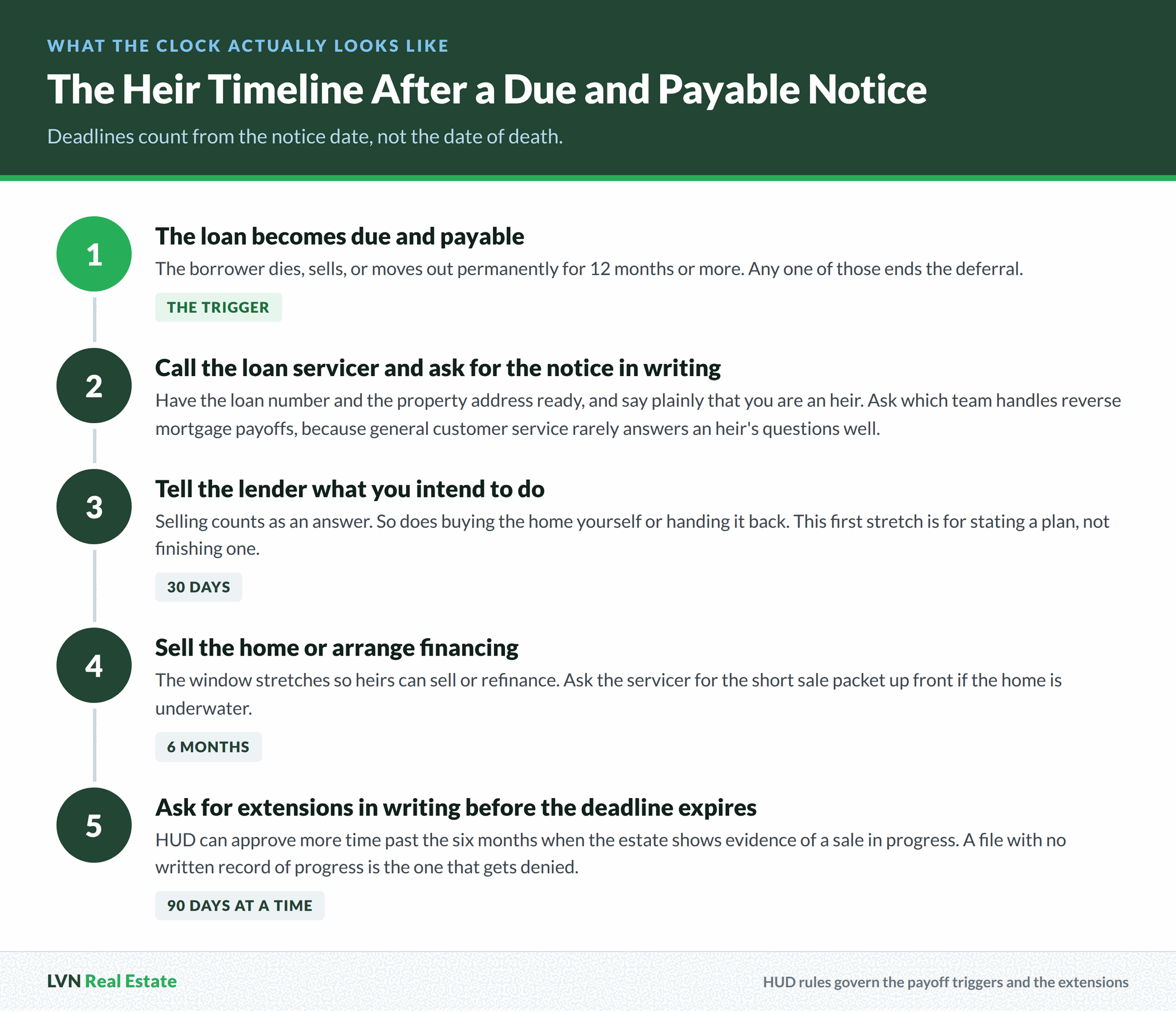
Servicers learn about a death two ways: someone in the family calls, or a death record reaches them through routine reporting. Don’t wait for the second one. Have the reverse mortgage loan number and the property address ready, and say plainly that you’re an heir. Ask for the due and payable notice in writing, and ask which team handles reverse mortgage loan payoffs, because general customer service rarely answers an heir’s questions well. Every deadline counts from that notice date.
The Response Window After a Due and Payable Notice
Heirs get 30 days from that notice to tell the lender their intent. Selling counts as an answer. So does buying the home yourself, or handing it back. Read the requirement closely, though. Your first month is for stating a plan, not finishing one.
That window stretches to 6 months so heirs can sell or arrange financing, and HUD can approve 90 days at a time past that. The estate has to show evidence of a sale in progress. So the practical timeline on a reverse mortgage Colorado heirs inherit runs longer than the first letter suggests. Ask for extensions in writing, and ask before the current deadline expires. A file with no written record of progress is the one that gets denied.
Some servicers also want an occupancy certification, a signed statement that no borrower still lives in the home. That form comes up most when the loan came due because the borrower moved into care rather than died. It also settles whether a non-borrowing spouse holds rights to stay. A surviving spouse who was never on the note has stronger protection under HUD rules than before 2015. An eligible non-borrowing spouse can sometimes defer the loan and stay for life.
How the Reverse Mortgage Loan Balance Grows, and How to Get a Payoff Statement
The loan balance climbs every month because nobody pays it down, and interest compounds on the principal, the reverse of what happens on a mortgage you’re paying off. Mortgage insurance premiums add to the total. Some servicers charge a monthly fee too, often $25 to $35, to keep the account open. HECM borrowers pay an upfront premium and an annual one to FHA on top. A Colorado borrower who signed a decade ago can owe well past what they received.
What the payoff statement shows can look nothing like what your parent borrowed. Don’t let it scare you. Read it as a starting figure, not a bill.
Your first call to the loan servicer should do two jobs: report the death, and request that formal mortgage payoff statement. It shows the current reverse mortgage loan balance, the daily interest accrual, and any outstanding fees. Ask the servicer to confirm the exact due and payable date in the same letter. Written confirmation protects the estate if the servicer’s records and your paperwork disagree.
Non-Recourse Protection and the 95 Percent of Appraised Value Rule
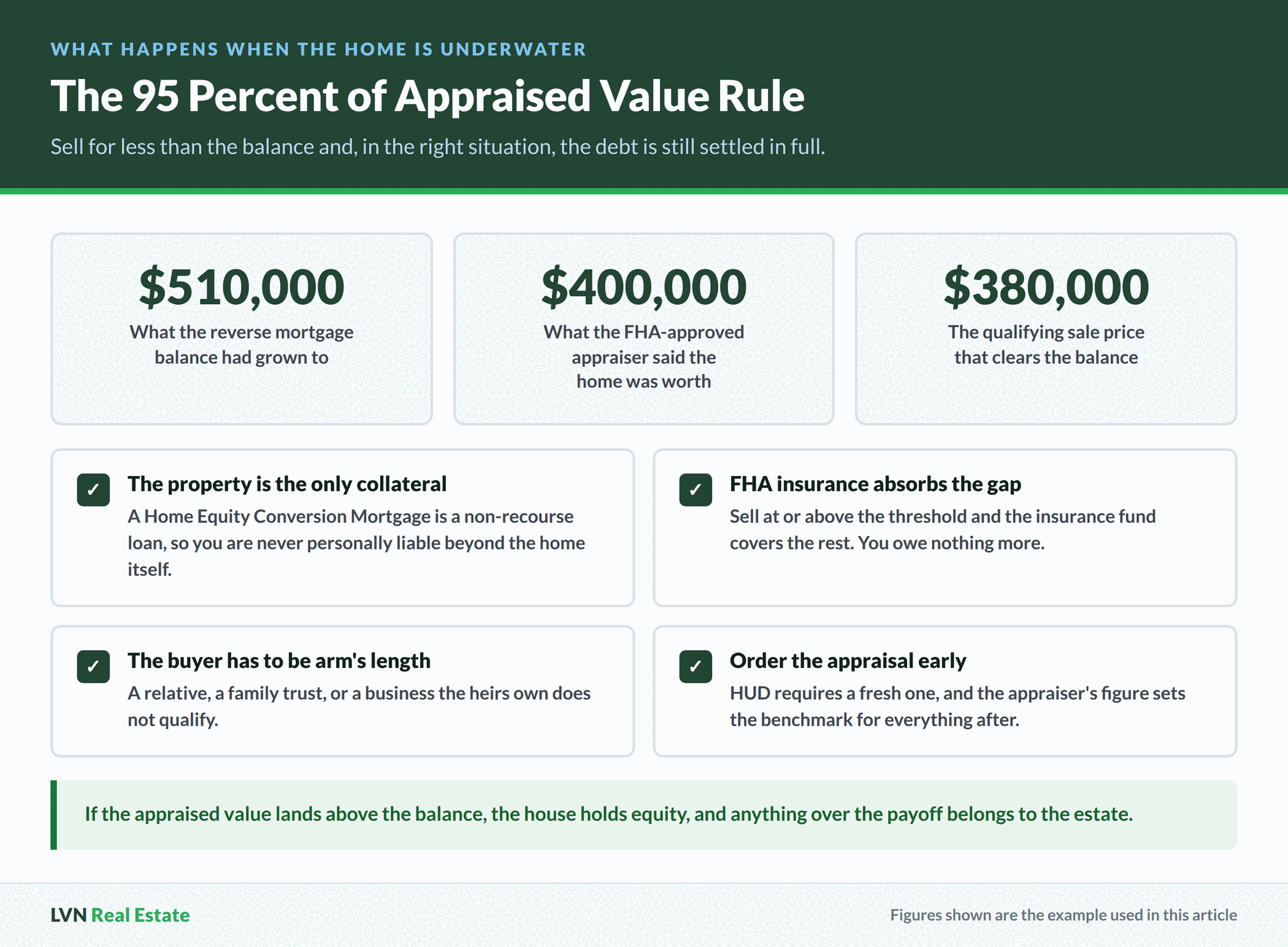
Most heirs have never heard of this protection, and it matters most when the loan balance sits above what the home is worth. A Home Equity Conversion Mortgage is a non-recourse loan, so you’re never personally liable beyond the home itself. Nobody can reach your savings, your car, or the roof over your own head. The property is the only collateral behind any reverse mortgage Colorado borrowers hold, and federal law keeps it that way.
When a HECM comes due and the home is underwater, it may be sold for 95% of its appraised value in certain situations. Put plainly, you can settle a bigger debt for less. Sell at or above that threshold, with the number set by an FHA-approved appraiser, and FHA’s insurance fund absorbs the gap. A conventional short sale can leave the lender chasing a deficiency judgment, and non-recourse rules make that impossible on Home Equity Conversion Mortgages. The debt dies with a qualifying sale.
HUD requires a fresh appraisal, and the appraiser’s figure sets the benchmark for everything after. Say the appraisal comes back at $400,000 while the reverse mortgage loan balance stands at $510,000. A sale at $380,000, the qualifying number, clears the balance in full. You owe nothing more, and FHA covers the rest. If the appraised value lands above the balance, the house holds equity, and anything over the payoff belongs to the estate. Order that appraisal early.
Selling the Home to Pay Off a Reverse Mortgage Colorado Heirs Inherit
Selling is how most heirs resolve a reverse mortgage. The process looks like a normal sale with one extra layer, since you’re coordinating with the loan servicer throughout. Before the property goes on the market, make sure you hold legal authority to sell, which usually means starting the Colorado probate process and getting letters testamentary. Informal probate covers most cases and beats the formal route on speed, and title companies want the death certificate, the will, and those letters.
With authority in hand, you can list the home with a Colorado real estate agent or take a direct cash offer. Keep the reverse mortgage servicer posted either way. Extension approvals need evidence, and an active listing or signed contract is what they want to see. Have the personal representative sign the listing agreement so the payoff clears at closing.
If the sale price clears the reverse mortgage balance, the estate keeps the difference. Home values along the Front Range have climbed over the past decade, so plenty of inherited Colorado homes hold real equity.
When the Home Is Worth Less Than the Reverse Mortgage Balance
Things get harder when the home is underwater, and that’s where the appraised value threshold earns its keep. Sell to an arm’s-length buyer at or above that value and the loan is satisfied, whatever the statement says. Arm’s length rules out a relative, a family trust, or a business the heirs own, and FHA insurance covers what the sale price doesn’t.
A HECM short sale is a lender-approved sale for less than the amount owed. Borrowers pay mortgage insurance premiums for the life of the loan, and those premiums do real work at the end. Proceeds go to the lender, the lien gets released, and heirs owe nothing afterward, though the servicer still needs HUD’s approval first.
Compare that with a conventional short sale, where the lender takes a loss and may chase the borrower for the difference. A reverse mortgage leaves Colorado heirs clean. Ask for the short sale packet up front, so nothing waits on a missing form. Servicers read slowly while the clock runs. A cash offer can shorten closing, since there’s no financing contingency. The servicer’s review process on a short sale runs weeks, not days.
Deed in Lieu of Foreclosure as an Alternative in Colorado
A deed in lieu of foreclosure means the heirs sign the property over to the lender rather than sit through a foreclosure. It fits when the home needs heavy repairs and the reverse mortgage loan balance towers over the appraised value. Because the loan is non-recourse, heirs owe nothing once the lender accepts the deed, and a HUD-approved counselor can walk you through this and the others.
Understand what a deed in lieu closes off. Any chance of recovering equity goes with the property. Pull comparable sales and a value estimate first, and exhaust the selling options if the home might sell near the reverse mortgage payoff.
Tell the loan servicer in writing that the estate wants to start the process, and they’ll order a title search first, since a deed in lieu only transfers clear title. Other liens can block it. Expect the servicer to want the property broom clean, keys handed over. Work with a Colorado real estate attorney so the deed gets executed and recorded properly.
Keeping the Home Instead of Selling
Heirs who want to keep the Colorado home have two routes. One runs through a refinance into a conventional mortgage. Heirs who retain the property can pay off the HECM balance or a capped share of the current appraised value, whichever is less. No heir ever pays more than that capped share, however high the reverse mortgage loan balance has climbed.
You’ll need steady income, decent credit, and enough equity in the property, and if the appraised value sits well below the reverse mortgage balance, a lender may decline to finance the full amount. Run the new payment against local rents before you commit to a Colorado property nobody plans to live in.
The other route is paying the reverse mortgage off outright from estate assets or your own money, since cash or investment accounts can retire the loan and hand the heirs clear title. Ask whether the home’s value justifies the payoff.
Selling While You Still Live in the House
Not every reverse mortgage Colorado homeowners carry ends up in an estate. Plenty of borrowers are still in the home, weighing whether to stay. Selling as the borrower puts you in charge of the calendar. No due and payable deadline presses on you, and you can take time to get the home ready.
Your reverse mortgage loan balance gets paid from the sale proceeds at closing. If the home’s value has grown since you signed, equity should remain after the payoff, and it’s yours. Older Colorado homeowners often put it toward a smaller place or a move closer to family. Downsizing is the most common reason a borrower sells voluntarily: maybe the yard is too much now, or property taxes have climbed. A voluntary home sale is the cleanest version of this.
Frequently Asked Questions About Selling a House with a Reverse Mortgage in Colorado
How long do heirs have to sell the home after a reverse mortgage becomes due and payable?
Per the Consumer Financial Protection Bureau, the clock starts on the date of the notice, not the date of death. Your first stretch is for telling the servicer what you intend, and the window then runs to half a year, with HUD able to extend it when you show progress. Get your own dates in writing, because a generic timeline won’t match your file.
Can heirs sell the home for less than the reverse mortgage loan balance?
Yes, and it’s the most misunderstood piece of the home equity conversion mortgage program. When the reverse mortgage balance runs past what the home is worth, heirs may not owe the difference in certain HECM situations. Selling to an arm’s-length buyer at or above the appraised value threshold satisfies the debt, and FHA’s insurance fund covers the shortfall. That value comes from an FHA-approved appraiser, not from a website estimate.
Does Colorado have any state-specific rules that affect a reverse mortgage sale?
No state law overrides the federal HECM framework, and HUD’s rules govern the payoff triggers, the extensions, and the non-recourse protections. Colorado probate law does affect how fast heirs get authority to close a sale, since title companies want letters testamentary before closing. The Colorado Judicial Branch publishes self-help material on the probate process, so file early, because delays there eat your extension window.
What happens if heirs do nothing after a due and payable notice?
Ignoring the letters doesn’t make the reverse mortgage go away. HUD guidelines require servicers to take first legal action within a set window once the loan comes due, absent an approved extension. That path ends in foreclosure, longer and rougher than any voluntary option, and heirs get notices along the way, with chances to sell, repay the balance, or work with a HUD-approved counselor. A Colorado foreclosure is public record.
Next Steps If You Need to Sell a Home with a Reverse Mortgage in Colorado
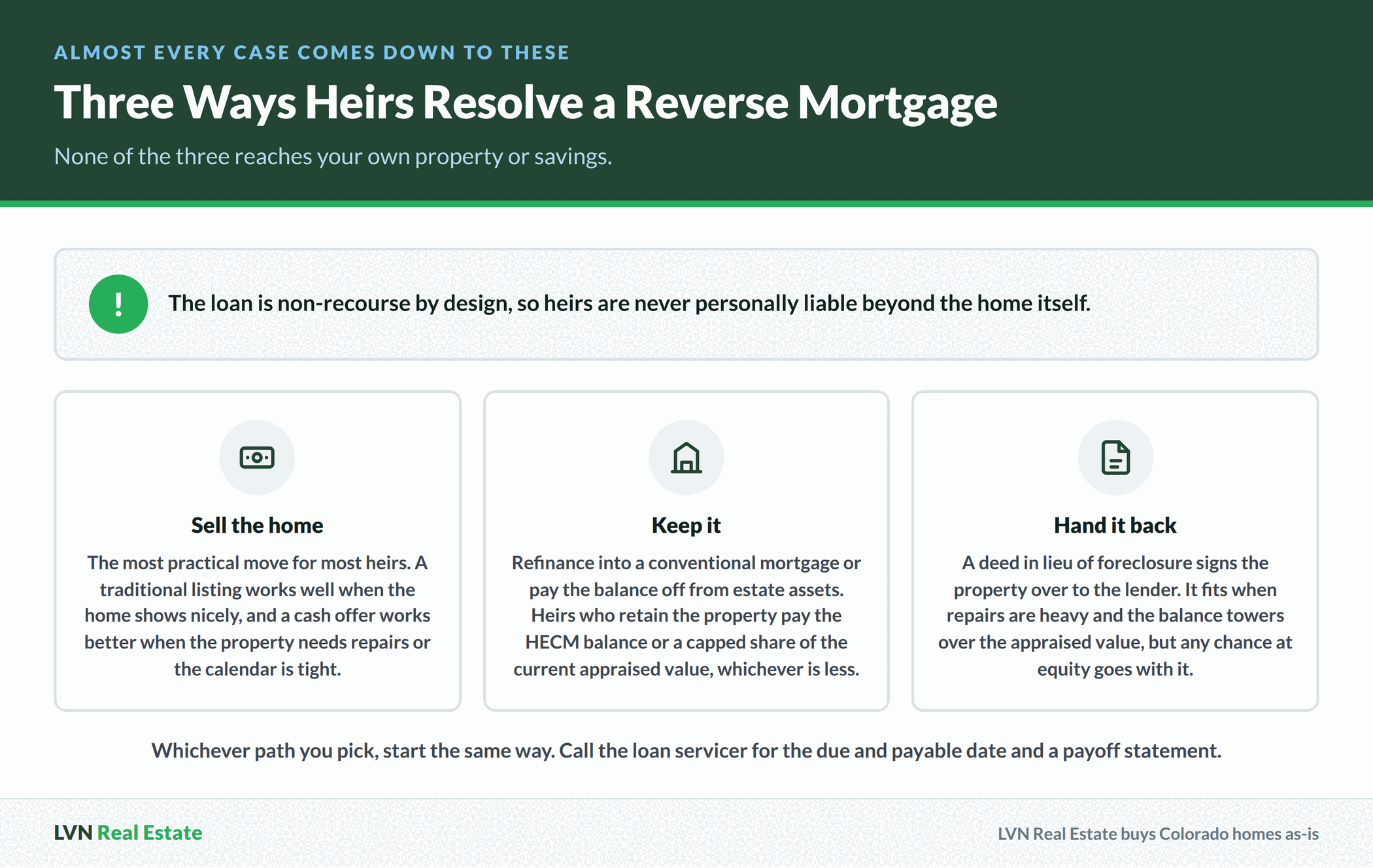
Almost every case comes down to three paths. You sell the home, you keep it by paying off or refinancing the balance, or you hand it back through a deed in lieu. None of the three touches your own property or savings, because the reverse mortgage is non-recourse by design.
For most heirs, selling is the most practical move, and a traditional listing with a real estate agent works well when the home shows nicely and the Colorado market supports a clean sale. A cash offer works better when the property needs repairs or the calendar is tight. Signing a deed in lieu is right when neither selling nor refinancing adds up.
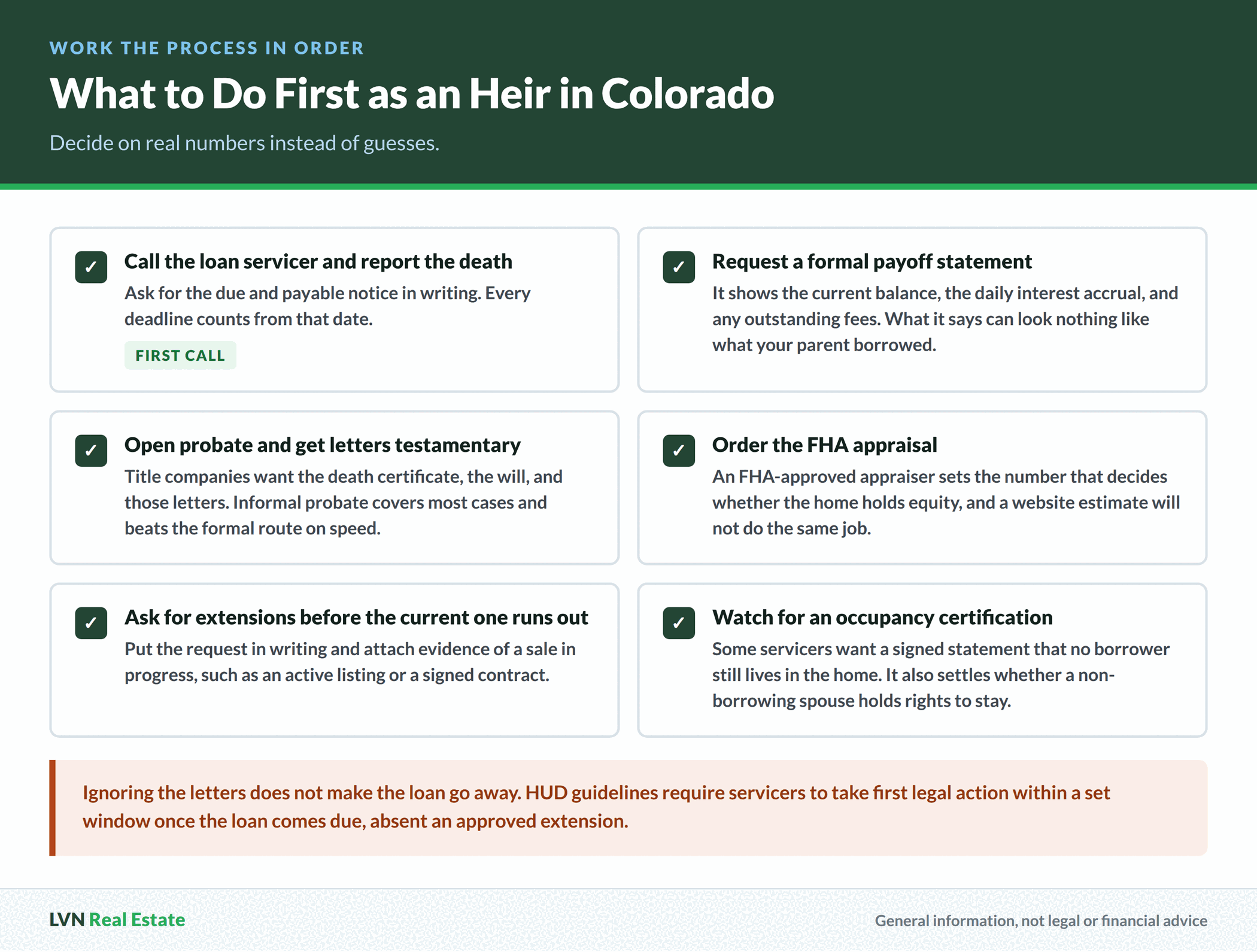
Whatever you pick, start the same way. Call the loan servicer, and get the due and payable date in writing along with a payoff statement. Open probate if you need to, get letters testamentary, and order the FHA appraisal so you know the appraised value and whether the home holds equity. Then decide on real numbers instead of guesses. Heirs who work the process in order usually find the home sale less punishing than they feared.
This article is general information, not legal or financial advice. Every reverse mortgage is different. Talk with a HUD-approved housing counselor, a Colorado real estate attorney, and a tax advisor before you make a final decision.
At LVN Real Estate, we’ve been buying homes as-is across the Front Range and the rest of Colorado since 2013. We’re veteran-owned, BBB accredited, and we buy houses in any condition. We’ve worked alongside heirs through reverse mortgage payoffs, so we know how the servicer side goes. We’re not right for every situation, and we’ll say so if listing with an agent serves the estate better. If you’d like a low-key conversation about what a cash offer on the Colorado property might look like, we’re easy to reach at 720-259-9274. No obligation and no hard sell.
Where LVN Real Estate Buys Houses Across Colorado
Most of the estates that reach out to us sit in the Denver metro, though we buy across Colorado. Reverse payoffs come up often enough here that we know the servicer side of a mortgage like that. If the house is in Denver, Aurora, Lakewood, Arvada, Longmont or Fort Collins, we already know how long that county takes to record a deed and what the local title companies want from a personal representative before they’ll close. Our service area runs the length of the Front Range and reaches the mountain towns and the Western Slope, and we buy homes as-is in any condition.
Talk Through Your Options on a Reverse Mortgage Payoff
You don’t have to decide anything today. If you’d like a straight read on what the Colorado house would bring in a cash sale, and how that compares with listing it, contact us and we’ll take a look. There’s no obligation and nobody chasing you afterward. If you’d rather read first, our common questions page covers how an offer gets built and what happens once you accept. You can also fill out the short form below and we’ll come back to you with a number. Bring the payoff statement and the loan number from the servicer if you have them. A mortgage that runs in reverse only makes sense next to a real figure on the house, and that figure is what we’d put in front of you. Reverse cases have their own rhythm, and we’ve sat with heirs through plenty of them, so the loan math won’t be new ground.