
Staging doesn’t sell a house on its own. The rented furniture leaves marks on your timeline and your bank account, and few people warn sellers that the rental clock keeps running after month one. If you plan to stage a house in Colorado this winter, set the setup fee aside for a minute. Watch the monthly bill after the setup fee, multiplied by however long the listing sits. That recurring bill drives the real math on what it takes to stage a house in Colorado, and now and then it tells you to skip staging completely.
Is It Worth It to Stage a House Before Selling?
Most listing agents don’t stage at all. NAR’s 2025 Profile of Home Staging found 21% of listing agents staged every home, while 51% skipped staging entirely and told sellers to declutter and fix obvious flaws instead. That one number changes the question. Staging isn’t standard practice. It’s a tool some properties need badly and others can skip without losing a dime.
Does it pay off? About 29% of agents in that survey said staging brought modestly higher offers than similar unstaged homes, and 49% of listing agents saw staged homes spend less time on the market. The full release is on NAR’s site, and it’s worth a careful read. Twenty-nine percent also means roughly seven in ten agents saw no measurable bump in price.
Early last year I sat at a kitchen table in Lakewood with a widow who’d carried two mortgages for almost eleven months. She’d inherited her mother’s place in Wheat Ridge, kept the utilities running, and hadn’t told her kids how tight money had gotten. We closed on the inherited house without moving a single piece of furniture in or out. Within three weeks she was back to one payment, and it’s still one of the fastest turnarounds I’ve seen.
My view is simple enough. With equity, time, and a house in decent shape, staging usually earns its keep. If you’re juggling two mortgages or the roof is shot, paying to stage a house just throws more money at a problem staging can’t fix.
How Much Does It Cost to Stage a House in Colorado?
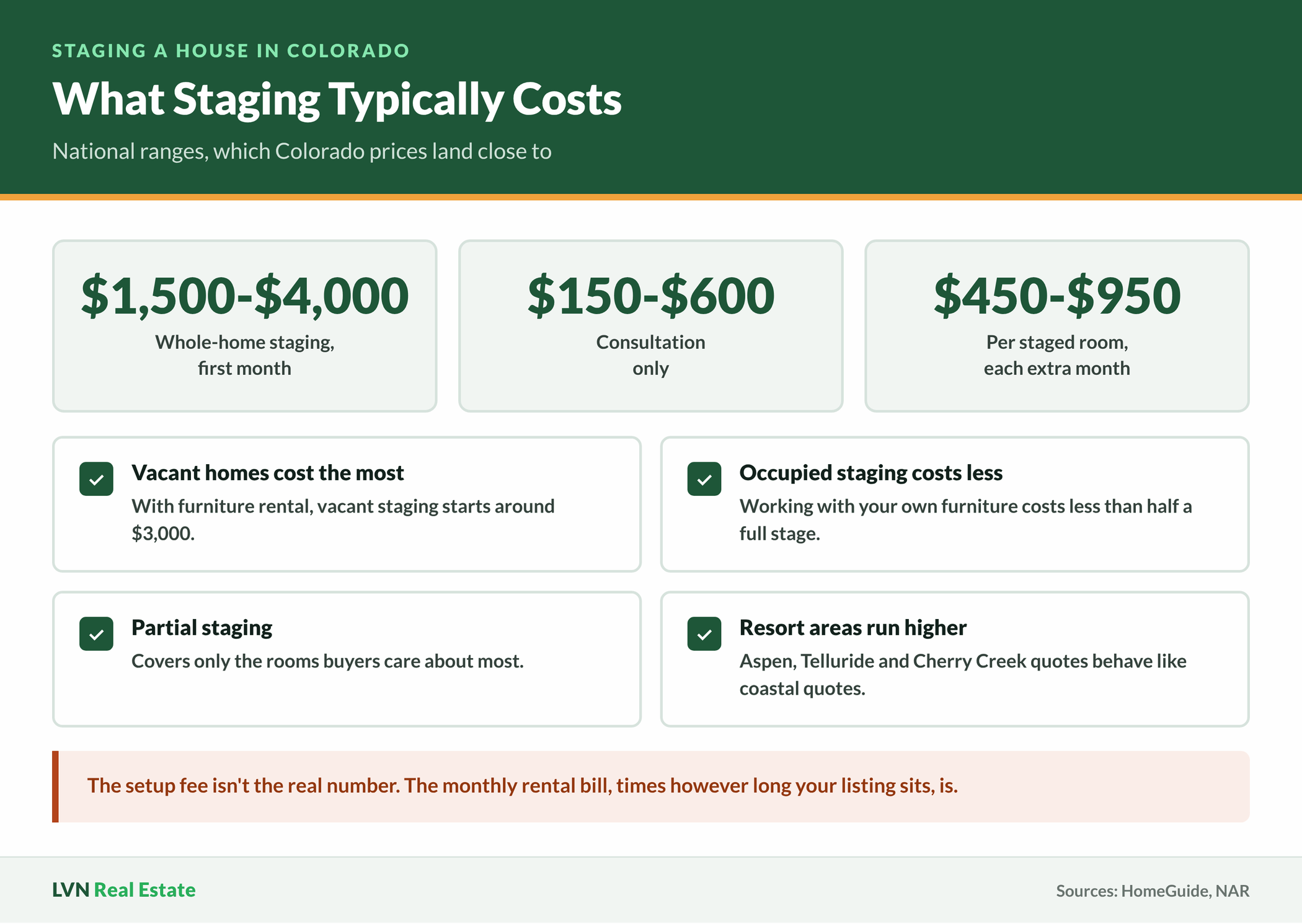
Vacant staging is where Colorado sellers take the biggest hit, and it’s the version most of them end up paying for. Nationally, whole-home staging runs about $1,500 to $4,000 for the first month. Consultations alone run $150 to $600, and vacant homes with furniture rental start around $3,000. HomeGuide’s staging cost breakdown matches what I hear stagers charging up and down the Front Range.
Colorado prices sit near those national midpoints rather than above them. High-cost metros like San Francisco and Los Angeles run 20 to 40% over the national average. Denver, Fort Collins, and Colorado Springs land closer to the middle. Aspen, Telluride, and Cherry Creek are another story, and quotes there look a lot like coastal ones.
Take a mid-sized Colorado home, say a four-bedroom in Centennial or Broomfield. A full stage there usually runs two to four thousand for month one. Occupied staging, where the stager works around your own furniture and adds decor, costs less than half that. Partial staging only covers the rooms buyers actually care about.
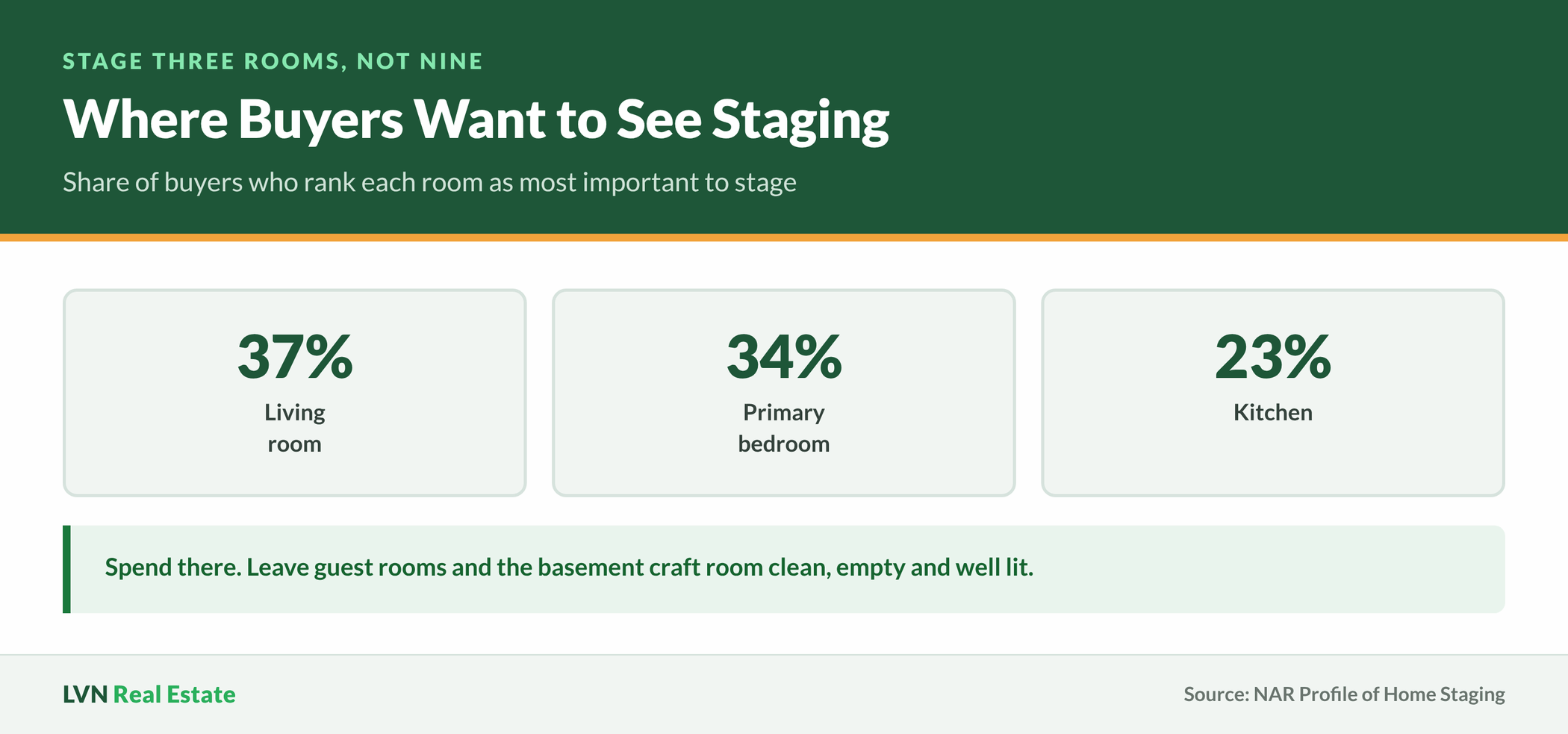
So which rooms count? Buyers rank the living room first at 37%, the primary bedroom second at 34%, and the kitchen third at 23%. Put your money there. Nobody’s offer moves because of the guest bedroom or the basement craft room, and I’ve watched Colorado sellers pay to furnish rooms that buyers forgot five minutes after walking out.
What Factors Affect the Cost to Stage a House?
“My house is only 1,600 square feet, so it should be cheap.” I hear that a lot, and square footage is just one lever among several. Room count pushes the bill harder than total size, since stagers price by the space they furnish rather than the floor plan.
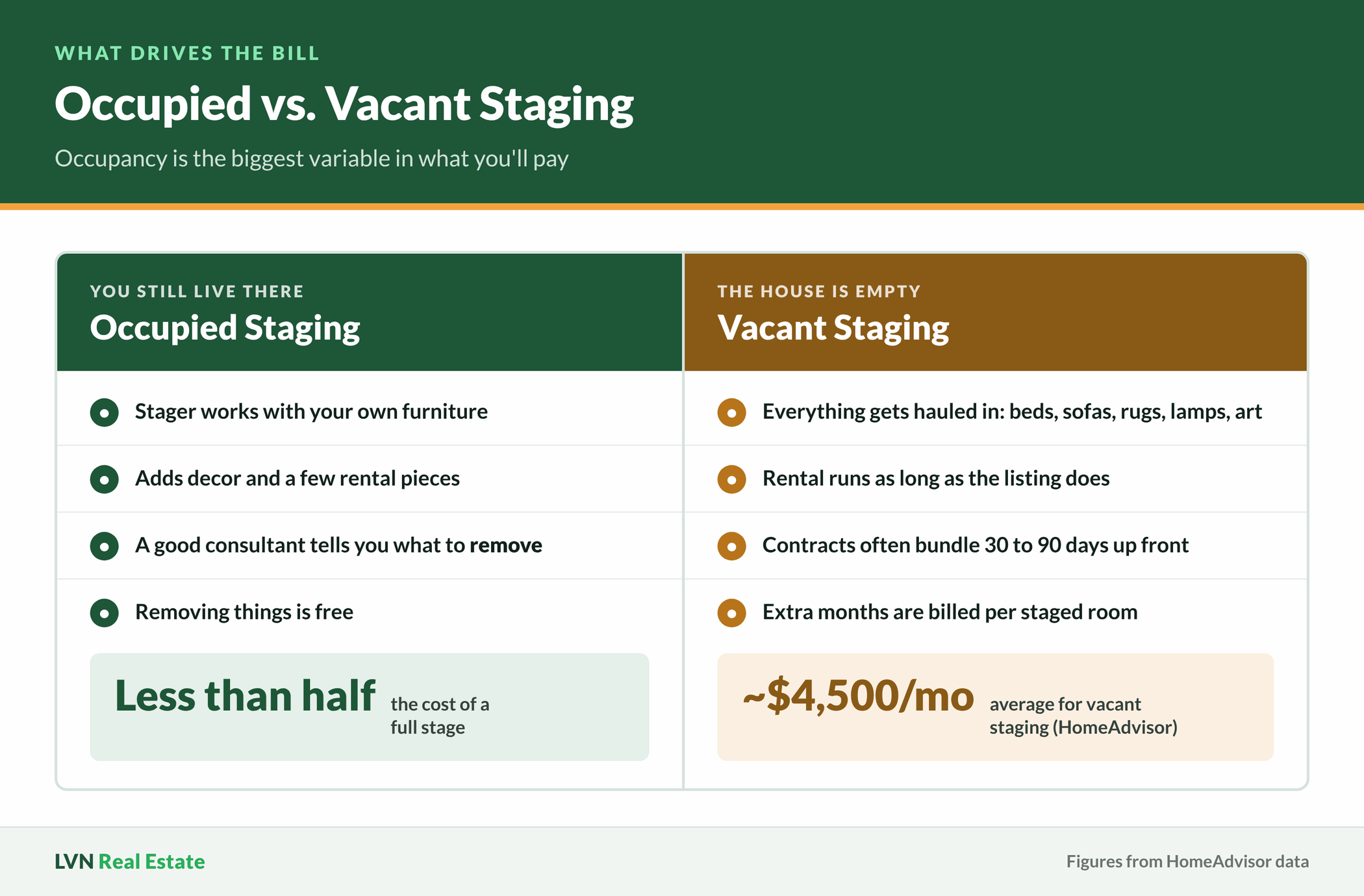
Occupancy is the biggest variable. An empty house in Colorado needs everything trucked in, from beds and sofas to rugs, lamps, art, and towels. A home you’re still living in mostly needs editing plus a few rental pieces.
Duration comes next, and Colorado sellers badly underestimate it right now. Most staging contracts fold 30 to 90 days of furniture rental into the upfront price. After that, you’re writing monthly checks. Ongoing rental averages $450 to $950 per staged room per month. Stage five rooms, sit two extra months, and you’ve added thousands to what it costs you to sell.
Property type changes the math as well. A 900-square-foot condo on Capitol Hill needs three rooms staged. A ranch on five acres outside Elizabeth calls for a different approach entirely, because the land and outbuildings carry part of the sale.
Then there’s the prep work no staging quote includes, like carpet cleaning, paint touch-ups, and junk runs to the dump. Your stager won’t handle any of it. The cost to stage a house in Colorado assumes that work is done before the truck shows up.
What Does a Typical Home Staging Budget Look Like in Colorado?
HomeAdvisor data puts the national average staging cost at $1,849, and that figure covers decor and furniture rental. Vacant staging averages about $4,500 a month. Start your Colorado budget from those two numbers, depending on whether anyone still lives in the house.
Picture a vacant three-bedroom in Arvada. You’d pay for a consultation, setup in the main living areas and the primary bedroom, and the first month of rentals. That’s a big chunk of money gone before the first showing.
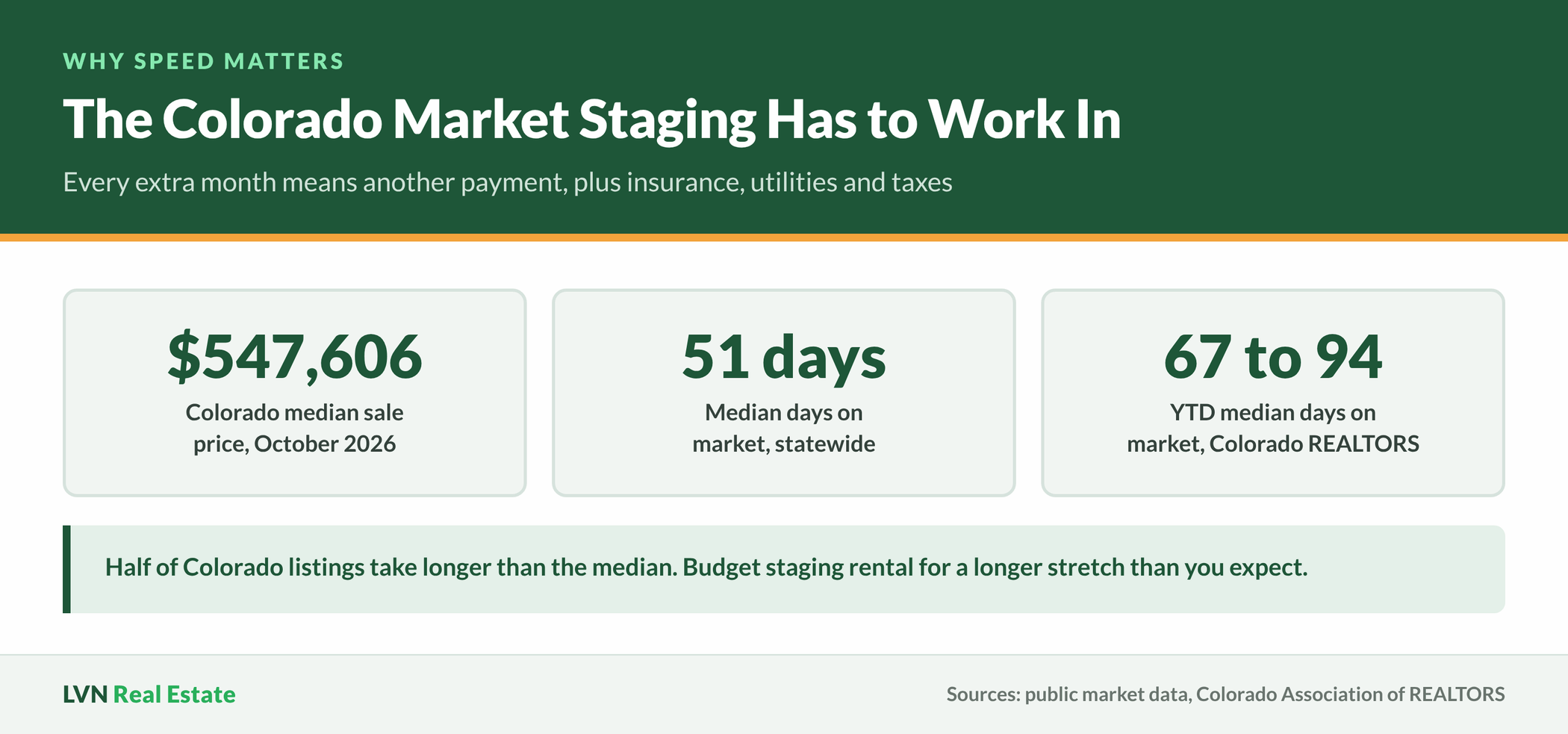
Now add carrying costs, the line sellers tend to forget. Colorado’s median sale price in October 2026 was $547,606, down just over half a percent from a year earlier, with a median of 51 days on market. Those figures come from public statewide market data. Keep in mind that 51 days is the median, so half of Colorado listings take longer.
Longer listings bring month two, month three, and a rental invoice for each. I’ve seen sellers count on a 30-day sale and still be paying for staging well past that. So budget for a much longer stretch of staging in Colorado even if you expect to sell sooner. If you’re wrong, you’re covered. If you’re right, the difference stays in your pocket.
One more line item is professional photography. Staging a house and then shooting it on a phone wastes the whole investment. Buyers’ agents told NAR that listing photos matter to their clients at 73%, ahead of physical staging at 57%.
How Much Does Staging Really Add to Your Sale Price?
That’s where the return gets murky. Agent surveys measure opinions, and nobody runs a controlled experiment. No one sells the same Colorado house twice, once staged and once empty, just to compare the receipts.
Do the arithmetic anyway. At Colorado’s current median, a small bump is worth about $5,500, and a 5% bump is worth roughly $27,000. Even the small end covers the cost of a stage. That rosy read only holds if you’re one of the sellers who sees any lift at all.
The real return in Colorado right now is speed, not price. The Colorado Association of REALTORS reported year-to-date median days on market rising from 67 to 94 in its November 2026 release. Their October market analysis shows buyers with leverage and sellers waiting it out. Every month you cut from that wait saves a mortgage payment, plus insurance, utilities, and taxes.
Do you know what your house costs you each month just to exist? Most sellers I meet have never added it up, and when I push for a number, they usually guess low. For plenty of Colorado homeowners it’s three to four thousand once everything’s counted, so selling three weeks faster can cover the stage on its own.
Staging won’t rescue a house with foundation issues, an outdated kitchen, or a price that’s off by eight percent. Nice furniture can’t fix a pricing problem. I’ve watched sellers stage a house in Colorado, re-stage it after a price cut, and still sit there, because the market was saying something the sofa couldn’t answer.
How Can You Stage a House Without Overspending?
A seller in Pueblo called me after her stager quoted more than the price cut her agent was suggesting. By then she’d already emptied the house into a storage unit, and that turned out to be the costly mistake.
Keep your furniture if it’s in decent shape. Occupied staging consultations cost a fraction of a full vacant setup, and a good consultant tells you what to take out rather than what to rent. Taking things out is free.
Virtual staging is worth a serious look in Colorado’s slower market. Designer virtual staging runs about $16 to $50 per image, compared with $500 or more per room for physical staging, and it pulls in online traffic. It falls flat when a buyer walks into an empty bedroom expecting the bed from the photos. Disclose it in the listing, and never use it to hide a real defect.
Stage three rooms, not nine. Focus on the living room, the primary bedroom, and the kitchen counters. Leave the rest clean, empty, and well lit.
Paint is the cheapest staging money you’ll spend, and I’ve seen it change how a buyer feels about a house in the first thirty seconds. In Longmont or Greeley, a neutral repaint over a dated interior shifts buyer perception more than rented end tables ever could. Light bulbs work the same way. Swap every one to a matching warm white, and the whole house photographs better.
If the budget to stage a house in Colorado would come out of money you don’t have, stop right there. Selling as-is to a direct buyer like LVN Real Estate skips staging, showings, and the rental clock. It isn’t the right call for every Colorado seller, though for some it’s the honest one.
What Should You Ask a Staging Company Before You Hire One?
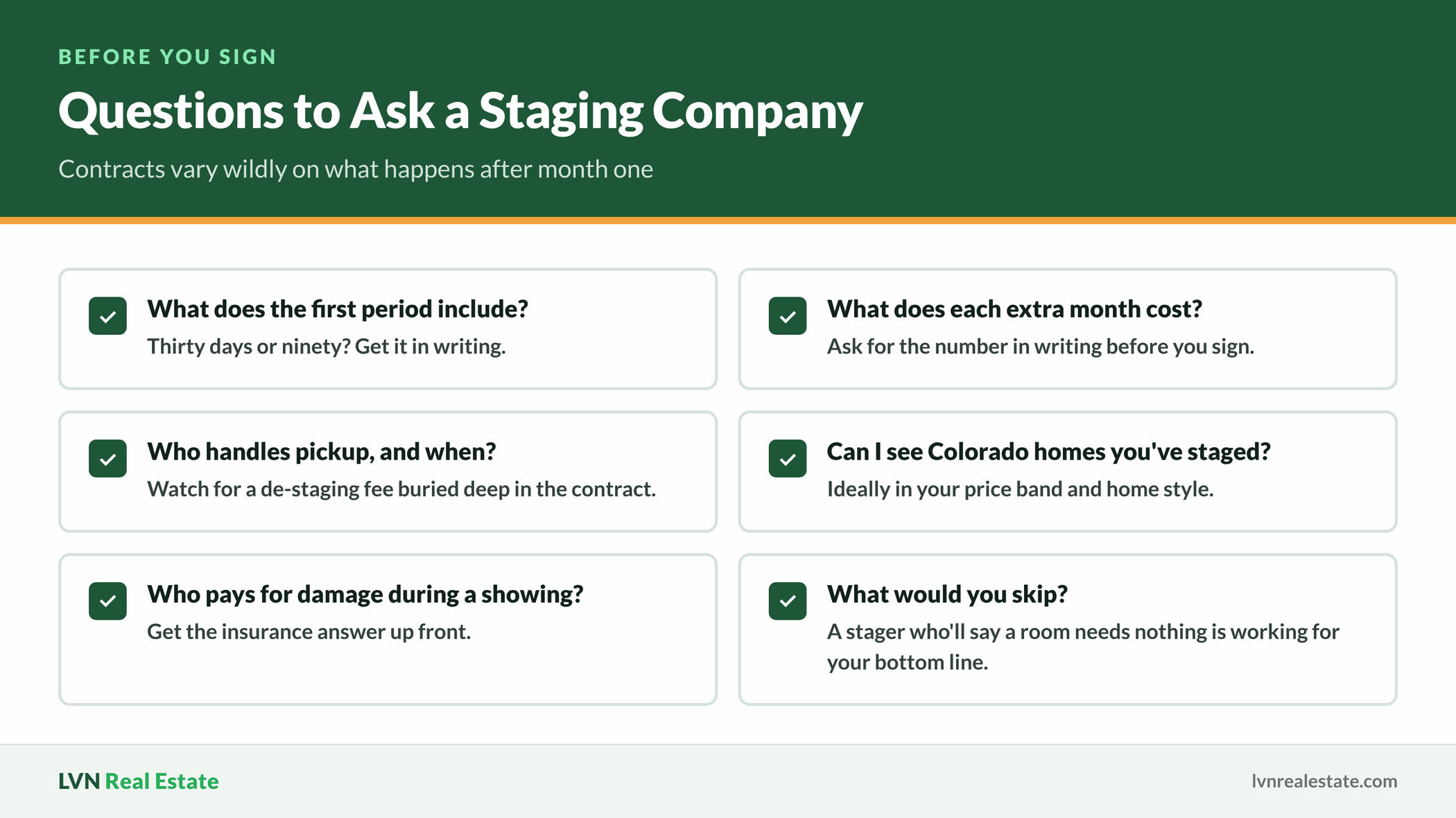
For years I figured every stager’s quote covered the same things. I was wrong often enough to learn it the hard way, because contracts vary wildly on what happens after month one.
Start by asking what the initial period includes. Is it thirty days or ninety? Then ask what each extra month costs, and get it in writing before you sign. Fuzzy answers on this point cost Colorado sellers real money.
Find out who handles pickup and when it happens. If your closing date moves, does the furniture leave on your schedule or theirs? A de-staging fee tucked into paragraph nine catches plenty of people off guard.
Ask for photos of actual Colorado homes they’ve staged, ideally in your price range. Mountain-town properties, Denver bungalows, and suburban tract homes each need different inventory. A stager whose portfolio is all million-dollar Boulder listings may not own the right furniture for a split-level in Thornton.
Who pays if something breaks during a showing? Get the insurance answer before anything gets delivered.
The last question separates good stagers from decorators: ask what they’d skip. A stager who’ll tell you a room doesn’t need furniture is looking out for your bottom line rather than their rental revenue. That’s who I’d hire to stage a house in Colorado.
What Else Should You Know Before You Stage a House in Colorado?
Last November, a seller I worked with nearly signed a staging contract without asking how winter would affect buyer turnout. Colorado showings in January happen after dark, with snow tracked across the floors and only serious buyers willing to leave home. Expect fewer showings, better buyers, and longer listings.
Regional differences matter more than most buyers expect in a state this varied. Colorado Springs posted a $455,000 median sale price in October 2026, down 4% from $473,500 a year earlier, according to local market data. Denver, Boulder, and the resort corridors each sit on their own price ladder. A staging budget that’s modest in Cherry Hills Village looks extravagant in Cañon City.
Mountain properties play by their own rules. Buyers in Summit County and Grand County want to see how a space handles gear like skis, boots, and bikes. So stage the mudroom. Hardly anyone mentions it, and it works.
A couple in Castle Rock came to us mid-divorce last spring. Between the finished basement and a garage packed with camping gear, there was plenty neither of them wanted to sort. Coordinating stagers through their attorneys held zero appeal. We bought it as-is on a Thursday, and they stopped having to talk to each other about the house.
That’s the quieter case against staging. Staging is for sellers with time, equity, and emotional bandwidth. If you’re short on any one of those, the cost to stage a house in Colorado is a cost you’re free to turn down.
Frequently Asked Questions
Does It Cost More to Stage a Vacant Home in Colorado?
Usually, and by a wide margin. An empty Colorado property needs every space furnished from scratch, so the stager’s truck, labor, and inventory all land on your bill as costs. An occupied one mostly needs editing and a few accent pieces, at a much lower price. Already moved out? Ask whether bringing back some of your own things would trim the cost to stage a house before you sign.
What Should a Home Stager Charge Per Room?
Most stagers price per room, and the bill usually splits into a one-time design and installation fee plus a monthly rental charge for as long as the furniture stays. The first invoice is the big one. The monthly bills are smaller, and they keep coming. If you’re setting rates as a stager in Colorado, price the install to cover your labor and truck time, then let the rental fee carry your inventory cost.
How Long Should a Home Staging Contract Run?
Plan around a sensible stretch on the market, not the best case. Homes across Colorado are taking longer to sell this year, and anything past the included period gets billed separately. Ask the stager to put the extension price in writing, and find out how much notice they need for pickup. A contract that fits your actual timeline protects you better than a cheap setup price does, and it keeps surprise costs off your closing statement.
Should You Use Virtual Staging When You Sell in Colorado?
It can work well for online traffic, especially when the place sits empty, and it costs a fraction of the physical version’s price. Note on the MLS that the photos are virtually staged, and include honest shots of each space as it actually looks. Virtual decor can’t stage a house for an in-person showing, and the cost savings disappear if buyers feel misled. It also shouldn’t cover up an actual defect like a water stain or a cracked wall.
Is It Better to Stage a House or Just Clean It Thoroughly?
A deep clean and a ruthless declutter get you most of the way, and that’s exactly what half of listing agents recommend instead of staging. Clear counters, clean windows, and no family photos cost you a weekend and nothing more. If your home shows well after that, you may not need to stage a house at all. When it still feels cold or confusing to walk through, that’s the point where a stager earns the fee.
Can I Sell a House in Colorado Without Staging It?
Absolutely, and plenty of Colorado sellers do it every month. Well-priced homes in good neighborhoods sell without a single rented sofa, especially with strong listing photos. Staging a house in Colorado is a marketing choice rather than a legal requirement, and skipping it won’t slow down your closing.
Trying to decide whether to stage a house in Colorado or sell it the way it sits? I’m happy to go over your numbers with you and tell you plainly which way the math leans. Sometimes the answer is “stage it and list it,” and I’ll tell you so. If selling as-is fits where you are right now, the team at LVN Real Estate can walk you through what that looks like. No pressure, no obligation, and nobody calling you twice a week afterward.
Selling a House in Denver or Anywhere in Colorado
Where your house sits changes the staging math. The seven-county Denver metro had 17,840 active listings in October 2026, according to the Colorado Association of REALTORS. That’s a lot of competition for one buyer’s attention. If you’d rather skip staging and showings, LVN Real Estate buys houses around the Denver area in their current condition.
Our team works well beyond the metro, too. Here’s where we buy in Colorado.
Want a Second Number Before You Pay a Stager?
Get the staging bid first. Then ask us for a cash offer on the house as it sits today, with no cleaning, staging or showings. Put the two numbers side by side and pick the one that fits your timeline. If you’d like that second number, contact LVN Real Estate or fill out the short form below. There’s no obligation either way.
Helpful Colorado Blog Articles